



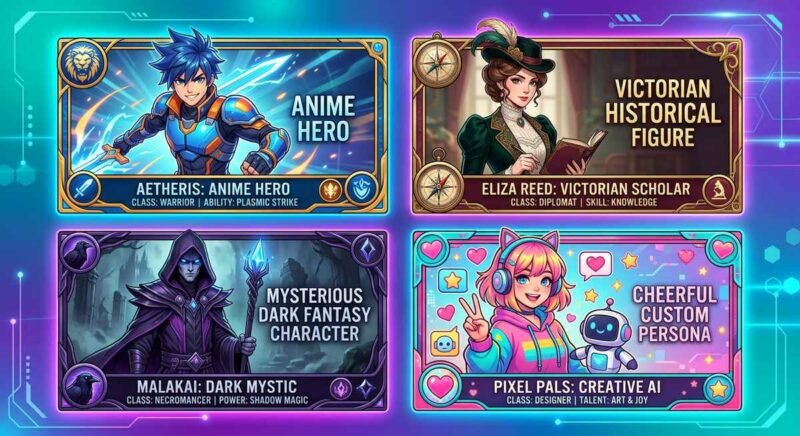
ChatFAI has carved out a niche in the AI chatbot landscape by letting users converse with AI-powered versions of fictional characters, historical figures, and completely original personas. Since launching in 2023, the Delaware-based platform has attracted 376,000 monthly visitors who want more than generic chatbot interactions—they want conversations with specific personalities.
The platform ranks #38 among AI chatbots, competing in a space where character depth matters as much as conversational quality. Users create and chat with characters spanning anime heroes, movie villains, book protagonists, and figures from history.
What sets ChatFAI apart is its character knowledge system. Each bot on chatfai.com pulls from defined personality traits, speech patterns, and background context that shape how it responds. The result is conversations that feel tailored to whoever—or whatever—you’re talking to.
Character Categories on ChatFAI
ChatFAI organizes its character library into distinct categories that reflect what users actually want to chat with. Anime characters dominate search interest, followed by fictional personalities from movies and TV shows, historical figures who shaped civilization, literary characters from beloved books, and custom creations built from scratch by the community.
Anime characters represent the largest segment of chatfai characters. The platform hosts AI versions of popular figures from Japanese animation, where fans recreate conversations with protagonists, antagonists, and side characters they’ve followed through entire series.
ChatFAI anime bots mirror the speech styles and personality quirks that define these characters in their source material.
Movie and TV characters bring cinematic personalities to conversational AI. Users build bots based on memorable characters from film franchises, streaming series, and classic television. These characters carry the dramatic weight of their on-screen personas into chat format.
Historical figures offer educational conversations. The platform features AI representations of scientists, leaders, artists, and thinkers from various eras. These bots draw from documented biographical information and historical context to simulate period-appropriate dialogue.
Literary characters translate page to platform. Book lovers create chatfai com characters based on protagonists and supporting characters from novels, short stories, and other written works. These bots attempt to capture the voice and worldview established by original authors.
Custom creations fill gaps the entertainment industry never addressed. Users design entirely original characters with unique backstories, personality matrices, and conversational styles. This category showcases ChatFAI’s flexibility as a character-building tool rather than just a character-chatting platform.
Most Searched ChatFAI Characters
Search data reveals which chatfai characters capture user attention most consistently. Specific character names appear repeatedly in platform searches, indicating either popular pre-made bots or frequent custom creation attempts around these archetypes and names.
ChatFAI Bully represents a character archetype that searches suggest significant interest in. The term appears frequently enough to indicate either a popular pre-existing character named Bully or a common character type users create for roleplay scenarios exploring conflict dynamics.
Users seeking this character type likely want conversations involving confrontation, dominance dynamics, or redemption arcs.
ChatFAI Tails refers to the iconic fox character from the Sonic franchise. As Sonic the Hedgehog’s loyal sidekick, Tails brings technical genius and unwavering friendship to conversations. The character’s popularity spans decades of video games, making him a natural fit for AI character recreation.
Fans use this bot to explore Tails’ inventor personality and his relationship dynamics with other Sonic universe characters.
ChatFAI Teacher appears as either a specific character or a roleplay archetype. The search volume suggests users create or seek out educator personas for various conversation purposes—from academic tutoring simulations to authority figure dynamics in creative scenarios.
The teacher archetype offers structured conversation patterns and knowledge-sharing dynamics.
ChatFAI Forsaken suggests a character name or theme centered on abandonment, isolation, or fallen hero narratives. Users searching this term likely want conversations with characters carrying emotional weight from being cast aside, betrayed, or left behind by their former allies.
ChatFAI Chance could reference either a character named Chance or scenarios involving risk, opportunity, and pivotal decision-making. The term’s search frequency indicates users find value in this character concept, whether as a gambler archetype, a luck-themed persona, or a character whose name is Chance.
ChatFAI Two Time appears in search data, though the specific character identity remains less clear. The term could reference a betrayal archetype (“two-timing”), a character who operates with dual identities, or a specific named character from niche media.
ChatFAI Tinder might represent an unconventional character concept—possibly a personification of the dating app experience, a fire-themed character, or a character whose name is Tinder. Search interest suggests users see conversational value in this concept.
ChatFAI Twisted indicates interest in characters with dark psychological complexity, moral ambiguity, or unpredictable behavior patterns. This archetype attracts users wanting conversations that challenge conventional character interactions through unsettling or psychologically complex personas.
ChatFAI Alice likely references the Alice in Wonderland character, one of literature’s most enduring protagonists. The character’s curiosity, adaptability, and experience navigating surreal situations make her a compelling AI conversation partner. Users might also create variants of Alice for different interpretational approaches.
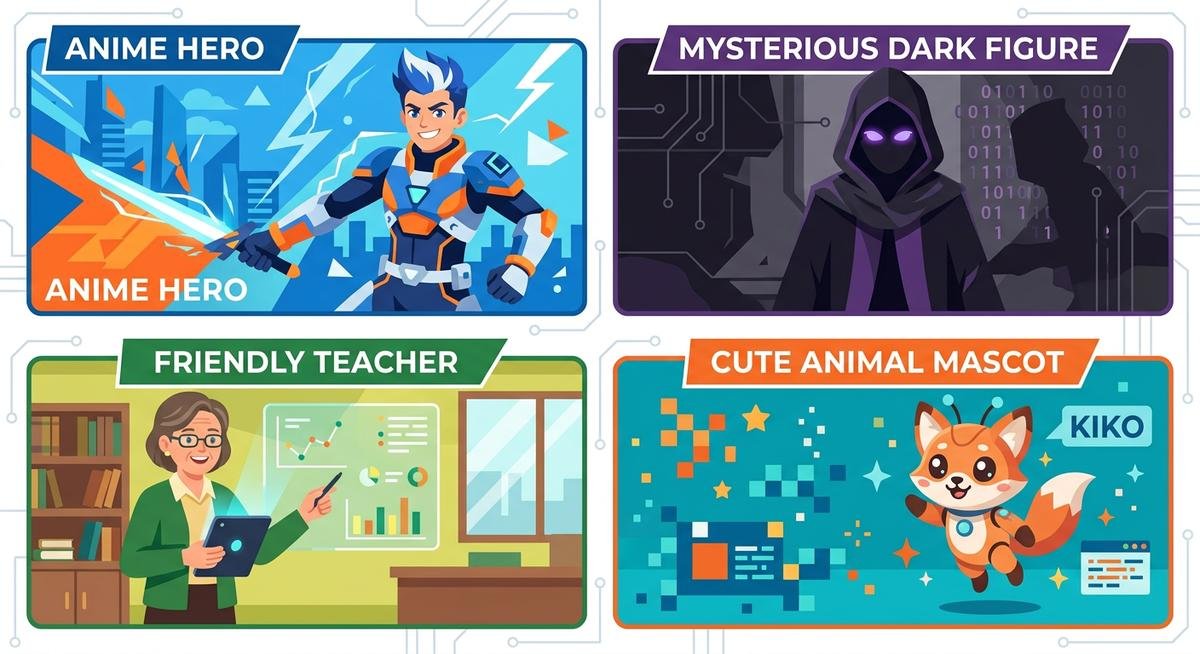
How Character Knowledge Sources Work
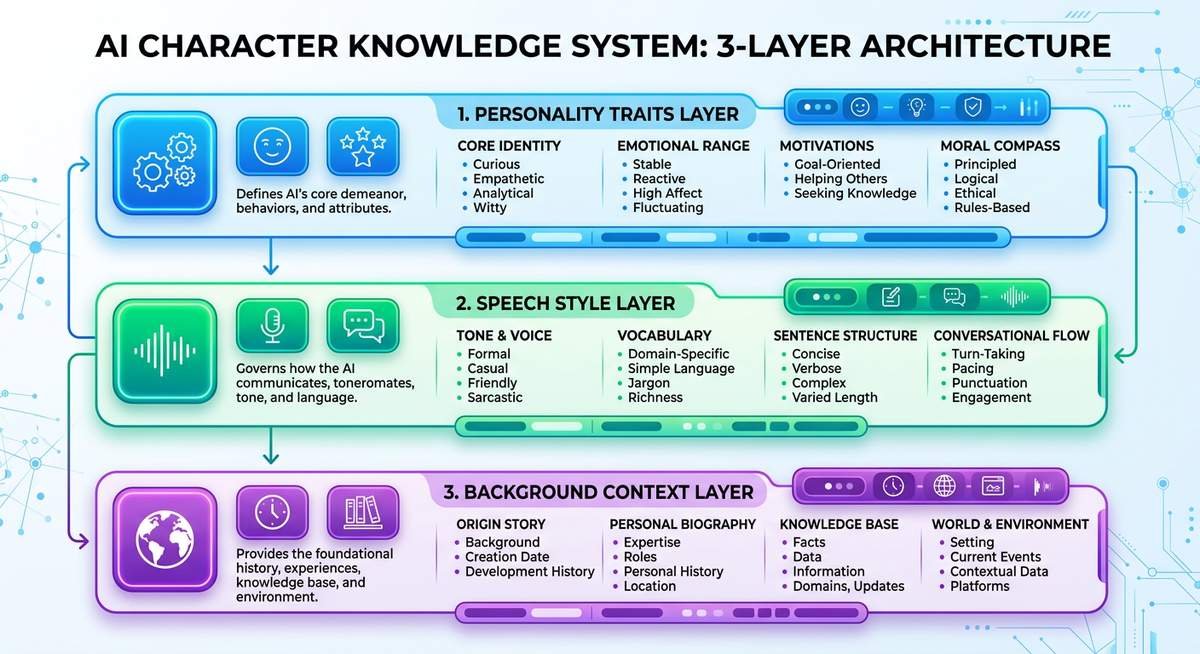
ChatFAI characters derive their conversational personality from knowledge sources that define who they are and how they communicate. The platform uses these information layers to shape character responses, ensuring consistency with the personality framework users establish during creation.
Personality traits form the foundation. Character creators define core attributes—confident, shy, aggressive, nurturing, sarcastic, sincere—that influence response tone and word choice. These traits act as conversational filters.
A character marked “arrogant” will phrase responses differently than one marked “humble,” even when discussing identical topics.
Speech style parameters control linguistic patterns. Creators specify vocabulary complexity, sentence structure preferences, dialect features, and verbal tics. A fantasy knight speaks differently than a modern teenager, and knowledge sources enforce these distinctions.
Background context provides situational awareness. Character knowledge includes biographical details, relationship histories, world-building information, and relevant life events. This context helps characters respond appropriately to questions about their past, motivations, and worldview.
The AI references these details when constructing responses that remain true to character.
ChatFAI’s system processes user messages against these knowledge layers. When you chat with a character, the platform evaluates your input, checks it against personality traits and background context, then generates a response matching the defined speech style.
This three-layer approach—personality, speech, background—creates conversational coherence. Characters maintain consistent voices across extended conversations because the knowledge sources remain active throughout each interaction.
The quality of character responses correlates directly with knowledge source depth. Well-defined characters with detailed backgrounds and specific speech patterns produce more engaging conversations than minimal-context creations.
Creating Custom Characters: What Makes a Good One
Effective custom characters on ChatFAI balance specificity with flexibility. The best character creations define clear personality boundaries and speech patterns while leaving room for natural conversation flow, avoiding over-specification that makes responses feel robotic or under-specification that produces generic interactions.
Start with a focused personality core. Choose three to five defining traits that capture your character’s essence. A character can be “loyal, impulsive, and optimistic” or “calculating, charming, and ruthless.”
This core provides enough definition for consistent responses without overwhelming the system with contradictory attributes.
Define speech patterns concretely. Instead of “speaks formally,” specify “uses complete sentences, avoids contractions, prefers multisyllabic vocabulary.” Instead of “talks casually,” try “frequent contractions, sentence fragments, contemporary slang.”
Concrete speech rules produce more authentic character voices.
Build layered backstory. Give your character history that explains their personality—not just biographical facts, but formative experiences. Why are they loyal? What betrayal taught them caution? What victory bred their confidence?
Backstory depth helps the AI generate responses with emotional resonance.
Establish relationship dynamics. If your character interacts with others, define those relationships clearly. Are they protective of younger siblings? Competitive with rivals? Deferential to mentors? Relationship context adds conversational depth.
Set conversational boundaries. Specify topics your character won’t discuss, subjects that trigger emotional responses, and areas of expertise or ignorance. Boundaries create realism—real personalities have limits.
Test and iterate. ChatFAI’s character creation process allows refinement. After initial conversations, adjust knowledge sources where responses feel off-character. Good character creation is iterative.
Avoid common pitfalls. Don’t make characters omniscient unless that’s their premise. Don’t create contradictory personality traits. Don’t over-specify every possible response scenario—trust the AI to interpret your foundational guidelines.
| Character Element | Weak Implementation | Strong Implementation |
|---|---|---|
| Personality | “Nice person” | “Empathetic, conflict-averse, self-sacrificing” |
| Speech Style | “Talks normal” | “Short sentences, rhetorical questions, interrupts self mid-thought” |
| Background | “Had a hard childhood” | “Raised by single parent after house fire, learned self-reliance young” |
| Expertise | “Smart” | “PhD in molecular biology, ignorant of pop culture” |
Frequently Asked Questions About ChatFAI Characters
How many characters can you create on ChatFAI?
ChatFAI allows users to create multiple custom characters, though the exact limit depends on account type. The platform’s emphasis on character creation suggests generous limits for standard users, with potential expanded capacity for premium subscribers. Users typically create character collections rather than single bots.
Can ChatFAI characters remember previous conversations?
ChatFAI characters maintain conversation history within individual chat sessions, allowing them to reference earlier discussion points during ongoing conversations. Long-term memory across separate sessions depends on platform architecture and account settings. The knowledge source system provides consistent personality regardless of memory features.
Are ChatFAI characters shared publicly or private?
Character privacy settings on ChatFAI likely offer both options. Users can create private characters for personal use or share creations publicly for the community to discover and chat with. Public sharing builds the platform’s character library, while private creation serves personal roleplay or entertainment needs.
What makes ChatFAI different from Character.AI?
ChatFAI differentiates through its knowledge source approach to character definition and its focus on giving creators granular control over personality traits, speech patterns, and background context. While both platforms offer AI character conversations, ChatFAI’s architecture emphasizes structured character building with defined parameters rather than purely training-based personality emergence.
Can you chat with multiple chatfai characters simultaneously?
Multi-character conversations depend on ChatFAI’s interface design. The platform may support group chat scenarios where multiple characters interact with users and each other, or it might limit conversations to one-on-one interactions. This feature would significantly expand roleplay and storytelling possibilities if implemented.
The Appeal of Defined Personalities
ChatFAI characters succeed because they offer conversational structure. Generic AI assistants provide information and complete tasks, but character bots provide personality—predictable yet dynamic interactions shaped by defined traits and backgrounds.
The platform’s growth to 376,000 monthly visitors reflects demand for AI interactions that feel less like customer service and more like actual conversation. Whether users chat with chatfai anime heroes, historical figures, or completely original creations, the draw is consistent: personalities with boundaries, quirks, and context.
Character quality depends on creation effort. The most engaging chatfai com characters emerge from detailed knowledge sources that balance specificity with conversational flexibility. They’re defined enough to feel real but flexible enough to handle unexpected dialogue.
As AI chat technology advances, platforms like ChatFAI demonstrate that users want more than intelligence—they want personality. The specific searches for characters like Bully, Tails, Teacher, and others show that people seek particular types of interactions, particular conversational dynamics that generic bots can’t provide.
ChatFAI characters fill that gap. They turn AI conversations from functional exchanges into personality-driven interactions worth returning to.