


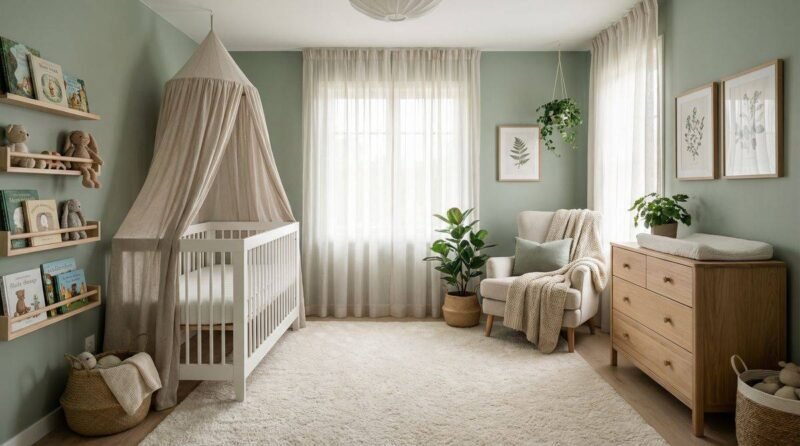
Introduction: Creating a Healthy Space for Your Baby
Answer Capsule: Selecting low-VOC paint is crucial for a baby’s nursery, reducing indoor air pollution and creating a purer, healthier environment for infant development.
Creating a safe and nurturing nursery involves careful paint selection. Traditional paints often contain Volatile Organic Compounds (VOCs) that off-gas harmful chemicals, posing risks to developing infants. Low-VOC or zero-VOC paints are essential for minimizing indoor air pollution and safeguarding your baby’s respiratory health. This guide explores the importance of low-VOC paints, offers selection criteria, and recommends trusted brands for a healthy nursery.
What Are VOCs and Why Does a Nursery Need Low-VOC Paint?
Answer Capsule: VOCs are harmful chemicals in paints that release into the air, causing indoor pollution. Infants’ fragile respiratory and immune systems necessitate low-VOC paint to prevent health risks like respiratory issues and allergies.
VOCs are organic chemicals that easily evaporate, contributing significantly to indoor air pollution. Common VOCs include formaldehyde, benzene, and toluene. Indoor VOC concentrations can be 2 to 5 times higher than outdoors, especially in newly renovated spaces. For infants, whose respiratory and immune systems are still developing, VOC exposure is particularly hazardous. Studies link early childhood VOC exposure to increased risks of asthma, allergies, and neurodevelopmental issues. Using low-VOC paint in nurseries is critical for infant health and pure indoor air.
How to Choose Low-VOC Paint for a Nursery?
Answer Capsule: When choosing nursery paint, prioritize low VOC levels (zero-VOC is best), seek third-party certifications (like GREENGUARD Gold), and avoid other harmful chemicals. Comprehensive consideration of these factors ensures paint safety.
Selecting safe nursery paint requires careful consideration beyond marketing claims. Understanding VOC levels, seeking independent certifications, and identifying other harmful chemicals are crucial steps to ensure a healthy environment for your baby.
Understanding VOC Levels: Low-VOC vs. Zero-VOC
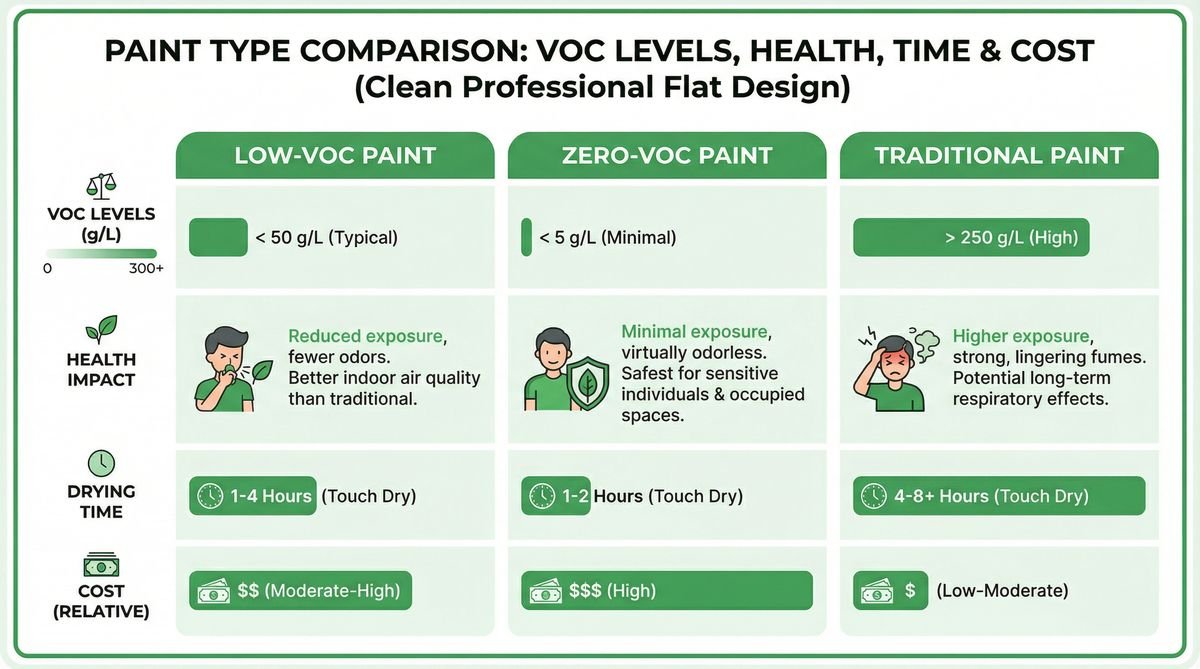
Answer Capsule: “Low-VOC” paints meet environmental standards (under 50 g/L), while “zero-VOC” paints contain minimal VOCs (under 5 g/L). Zero-VOC offers superior safety and is ideal for nurseries.
- Low-VOC: These paints typically contain less than 50 g/L of VOCs, meeting most environmental regulations. While safer than traditional paints, they may still release some volatile substances and odors.
- Zero-VOC: These paints contain extremely low VOC levels, usually less than 5 g/L, with some claiming complete absence. They are the safest option, ideal for sensitive individuals and nurseries, as they produce minimal odor and emissions during and after application. Prioritize zero-VOC paints for nurseries, checking for authoritative certifications to ensure genuine low emissions.
Look for Third-Party Certifications: GREENGUARD Gold and More
Answer Capsule: Third-party certifications, especially GREENGUARD Gold, are vital for paint safety. They ensure products meet strict low chemical emission requirements through rigorous testing, making them suitable for children’s environments.
Independent third-party certifications provide reliable assurance of a paint’s safety and environmental performance. Key certifications include:
- GREENGUARD Gold Certification: A globally recognized standard by UL Environment, ensuring extremely low chemical emissions suitable for children and schools.
- Cradle to Cradle Certification: Evaluates products comprehensively for material health, reutilization, renewable energy, water stewardship, and social fairness.
- Declare Label: Provides full ingredient transparency, similar to a food label, helping consumers avoid specific harmful substances.
Always verify these certifications on product packaging to ensure genuine safety and environmental compliance.
Watch Out for Other Harmful Chemicals
Answer Capsule: Beyond VOCs, avoid heavy metals (lead, cadmium), formaldehyde, phthalates, and APEOs in paints. Choosing products free of these enhances nursery safety.
Even low-VOC or zero-VOC paints can contain other harmful ingredients. Be vigilant about:
- Heavy Metals: Lead, cadmium, and mercury can severely impact children’s neurological development. Choose products explicitly labeled heavy-metal-free.
- Formaldehyde: A carcinogen causing respiratory issues. Opt for formaldehyde-free or ultra-low formaldehyde products.
- Phthalates: Endocrine disruptors affecting reproductive development and allergies. Look for “phthalate-free” labels.
- Alkylphenol Ethoxylates (APEOs): Surfactants harmful to aquatic life and potentially endocrine-disrupting. Choose APEO-free paints.
Always read product labels and contact manufacturers for detailed ingredient information to ensure comprehensive safety for your baby.
Top Recommended Low-VOC Paint Brands for Nurseries
Answer Capsule: Several excellent low-VOC paint brands offer superior safety and performance for nurseries, including ECOS Paints, AFM Safecoat, Clare Paint, Sherwin-Williams Harmony, Benjamin Moore Natura, and Behr Premium Plus.
These brands are committed to health and environmental safety, offering superior low-VOC or zero-VOC formulas:
ECOS Paints: The Exceptional Non-Toxic Choice
Answer Capsule: ECOS Paints is renowned for its 100% zero-VOC, non-toxic, and allergen-free formula, ideal for sensitive individuals and nurseries. It’s GREENGUARD Gold certified, free of formaldehyde and heavy metals, and offers diverse colors.
ECOS Paints leads in non-toxic options, offering 100% zero-VOC products free from formaldehyde, heavy metals, and other harmful substances. GREENGUARD Gold certified and virtually odorless, they are perfect for nurseries and chemically sensitive individuals.
AFM Safecoat: The Guardian of a Healthy Home
Answer Capsule: AFM Safecoat provides safe products for chemically sensitive individuals, featuring extremely low VOC levels and excellent performance. Their comprehensive line minimizes indoor air pollution.
AFM Safecoat specializes in low-toxicity, allergen-free products. Their Safecoat Naturals and Safecoat Zero VOC lines are extremely low in VOCs and free of harmful chemicals. GREENGUARD Gold certified, AFM Safecoat offers a complete system of primers, topcoats, and sealers.
Clare Paint: Where Style Meets Safety
Answer Capsule: Clare Paint combines stylish colors with a zero-VOC formula. It simplifies color selection, offers eco-friendly, high-performance paints, and is GREENGUARD Gold certified, ideal for modern families.
Clare Paint combines modern aesthetics with environmental responsibility. Their zero-VOC paints are free from formaldehyde and phthalates, and all products are GREENGUARD Gold certified. Clare simplifies color selection with curated palettes and offers high-performance, durable, and easy-to-clean paints.
Sherwin-Williams Harmony: A Popular Zero-VOC Solution
Answer Capsule: Sherwin-Williams Harmony is a popular zero-VOC paint with odor-eliminating technology, offering good coverage and durability. It’s a top choice for nurseries needing quick occupancy.
Sherwin-Williams Harmony is a well-known zero-VOC paint with odor-eliminating technology, creating a fresher indoor environment. It boasts good coverage, durability, and easy-to-clean properties. GREENGUARD Gold certified, Harmony is a reliable choice for those seeking a safe and high-performing paint.
Benjamin Moore Natura: The Natural Choice
Answer Capsule: Benjamin Moore Natura is a zero-VOC paint known for exceptional performance and eco-friendliness. It emits no harmful VOCs, offers excellent coverage, and provides a safe, long-lasting finish for nurseries.
Benjamin Moore Natura is a premium zero-VOC paint known for its exceptional quality and environmental safety. It emits no harmful VOCs during application or drying, ensuring pure indoor air. Natura offers excellent coverage, durability, and easy cleanability. GREENGUARD Gold certified, it’s perfect for a high-quality, safe nursery.
Behr Premium Plus: The Budget-Friendly Green Option
Answer Capsule: Behr Premium Plus offers affordable low-VOC and zero-VOC options, some GREENGUARD Gold certified. It provides good coverage and durability, making it practical for budget-conscious families seeking safe nursery paint.
Behr Premium Plus provides affordable low-VOC and zero-VOC options, some with GREENGUARD Gold certification. Known for good coverage, durability, and easy cleaning, it’s a practical choice for budget-conscious families. It balances cost-effectiveness with safety, making eco-friendly renovation accessible.
Nursery Painting Safety Guide and Precautions
Answer Capsule: When painting a nursery, ideally do it during the second trimester or 2-3 months before birth. Ensure adequate ventilation and allow paint to cure and off-gas to minimize health risks.
Even with safe paints, proper application and precautions are vital. Following these guidelines ensures a truly safe nursery environment.
Optimal Painting Timing and Ventilation
Answer Capsule: Complete nursery painting during the second trimester or 2-3 months before birth. Maintain adequate indoor ventilation during and after painting with open windows, doors, and fans to dissipate VOCs and odors.
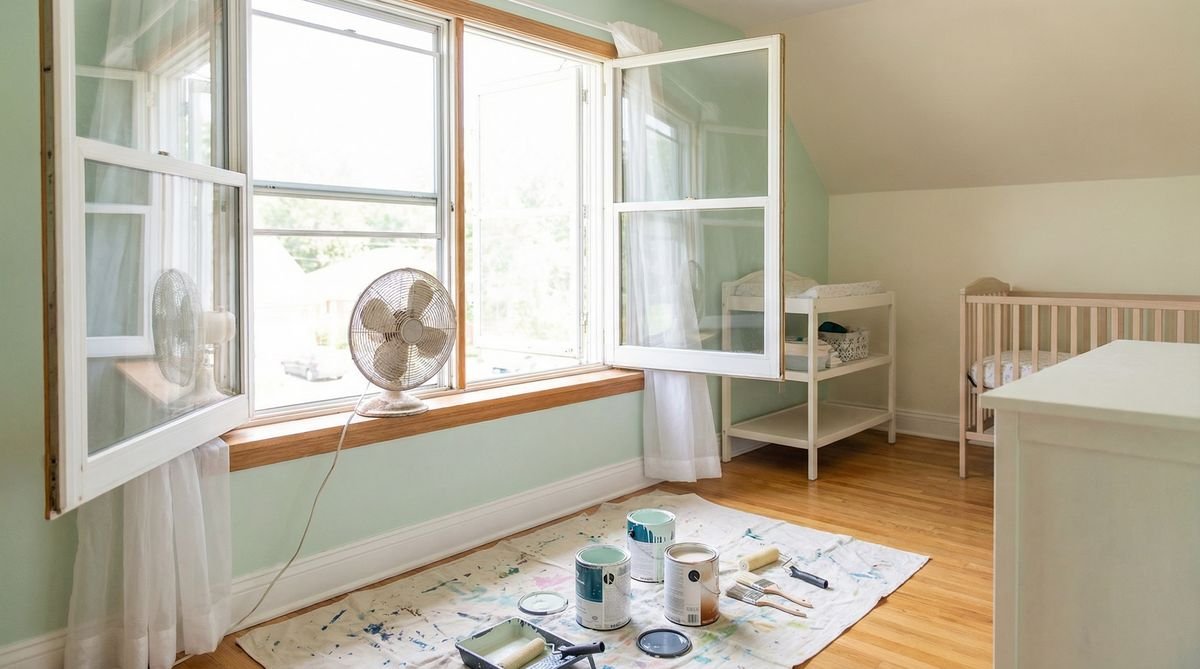
- Painting Timing: Ideally, paint the nursery 2-3 months before the baby’s arrival or during the second trimester of pregnancy. This allows ample time for the paint to dry, cure, and for any residual odors or trace VOCs to dissipate.
- Adequate Ventilation: Maintain thorough ventilation during and for several days/weeks after painting. Open windows and doors, and use fans to create cross-ventilation. Good airflow expels VOCs and pollutants, even from zero-VOC paints, and aids drying.
Paint Curing Time and Move-In
Answer Capsule: Paint is surface-dry in hours, but full curing takes weeks or months. Allow the baby to move into the nursery only after full curing and adequate ventilation.
- Drying vs. Curing: Paint is surface-dry in hours, but full curing takes weeks or months. Before full cure, trace VOCs may still release, and the film is vulnerable. Do not mistake surface dryness for complete safety.
- Move-In Time: For optimal safety, allow the paint to fully cure and the room to be thoroughly ventilated before the baby moves in. Consult the paint’s product manual for recommended curing times. Patience ensures a truly safe and healthy environment.
Frequently Asked Questions (FAQ)
Answer Capsule: This section answers common questions about low-VOC paints and nursery painting, helping parents better understand and apply eco-friendly paints to create a healthy and safe growth environment for their babies.
Are Low-VOC Paints Really Completely Odorless?
Answer Capsule: Even low-VOC or zero-VOC paints may have a slight, harmless odor from ingredients like latex, not VOCs. This dissipates quickly.
Low-VOC and zero-VOC paints may have a slight odor, but it typically comes from harmless ingredients like latex or pigments, not harmful VOCs. This mild odor dissipates quickly and is not a health concern. For maximum odor reduction, choose GREENGUARD Gold certified zero-VOC paints and ensure good ventilation after painting.
Is Zero-VOC Paint Better Than Low-VOC Paint?
Answer Capsule: Zero-VOC paint is generally superior to low-VOC paint for nurseries due to minimal harmful emissions, offering highest safety. Performance is similar, but zero-VOC is ideal if budget allows.
Zero-VOC paints are generally superior to low-VOC paints for nurseries due to their minimal harmful chemical emissions, offering the highest safety. While low-VOC paints are also much safer than traditional options and often perform similarly, zero-VOC is ideal if budget allows for the purest environment. Consider your budget, safety priorities, and specific brand performance when choosing.
How Long Does It Take for Nursery Paint to Dry Completely?
Answer Capsule: Surface drying takes hours, but full curing takes weeks or months. Allow the baby to move in only after full curing and adequate ventilation.
Paint is surface-dry in hours, but full curing—when the paint film achieves its final hardness and durability—takes weeks or months, depending on paint type, environment, and ventilation. Do not confuse surface dryness with complete safety. Allow full curing and thorough ventilation before the baby moves in. Patience ensures optimal air quality and paint performance.
Can I Paint the Nursery While Pregnant?
Answer Capsule: Pregnant women should avoid direct painting, even with low-VOC paints. Have others paint, ensure ventilation, and wait for odors to dissipate before entering.
Pregnant women should avoid direct involvement in painting, even with low-VOC paints, due to potential risks from chemicals or odors. The safest approach is to have others paint, ensure thorough ventilation during and after, and for the pregnant woman to avoid the area until all odors have dissipated. Plan painting for the second trimester, with ample time for curing and ventilation before the baby’s arrival.
Besides VOCs, What Other Paint Ingredients Should I Watch Out For?
Answer Capsule: Beyond VOCs, avoid heavy metals, formaldehyde, phthalates, and APEOs in nursery paint. Choose products explicitly free of these for comprehensive safety.
Beyond VOCs, be aware of other harmful paint ingredients: heavy metals (lead, cadmium, mercury) can impair neurological development; formaldehyde is a carcinogen causing respiratory issues; phthalates are endocrine disruptors affecting development; and APEOs are surfactants with environmental and health concerns. Always choose paints explicitly free of these substances for comprehensive safety.
Conclusion: Making the Smart Choice for Your Baby
Answer Capsule: Choosing low-VOC paint for the nursery is crucial for your baby’s healthy growth. Understanding VOCs, verifying certifications, selecting reputable brands, and following safe painting guidelines creates a safe, pure, and loving space.
Selecting the right paint for your nursery is vital for your baby’s health. By understanding VOCs, prioritizing low-VOC and zero-VOC options, and verifying third-party certifications, you can make an informed choice. Brands like ECOS Paints, AFM Safecoat, Clare Paint, Sherwin-Williams Harmony, Benjamin Moore Natura, and Behr Premium Plus offer excellent eco-friendly solutions. Adhering to safe painting practices, including proper ventilation and curing times, further ensures a healthy environment. Your careful selection provides a safe, pure, and loving space for your baby to thrive. For more information on indoor air quality, visit the EPA’s Indoor Air Quality page.