



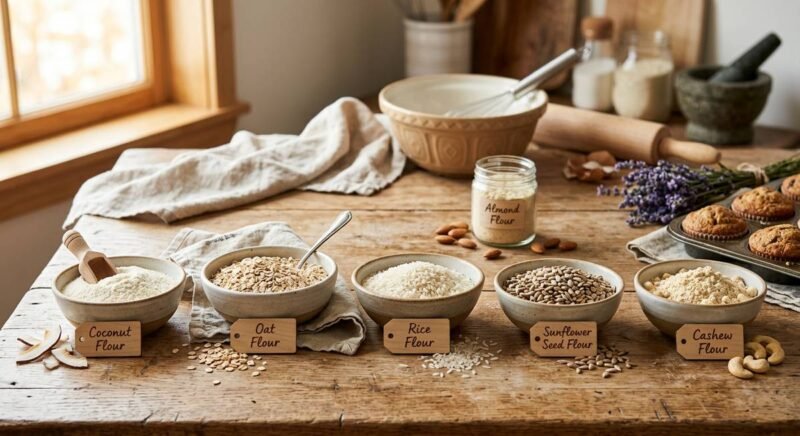
Oat flour, coconut flour, sunflower seed flour, and cassava flour all work as an almond flour alternative in baking, but each demands a different ratio and behaves differently depending on the recipe. The right substitute hinges on three questions: do you need nut-free, low-carb, or just something cheaper that holds a bake together?
Almond flour typically runs $10 to $14 per pound. All-purpose flour costs under $3. That price gap alone drives most of the substitution questions, but tree nut allergies, keto macros, and mid-recipe pantry shortages round out the picture. According to USDA FoodData Central, almond flour contains roughly 56 grams of fat and 6 grams of net carbs per cup, and those numbers are what make substitution tricky. Fat affects moisture. Carbs affect diet compliance. Protein affects structure. Every swap involves trade-offs.
What follows covers 15 substitutes organized by dietary need, specific recipe type, and exact conversion ratios, plus the baking science that explains why a straight 1:1 swap almost never works the way you expect.
The Best All-Purpose Almond Flour Substitutes for Baking
Oat flour is the single most practical almond flour substitute for everyday baking. It swaps in at a near 1:1 ratio for cookies, muffins, pancakes, and banana bread, and it costs a fraction of what almond flour commands. USDA data shows oat flour contains about 6 grams of fat per 100 grams compared to almond flour’s 50 grams, which directly affects how moist your final bake turns out.
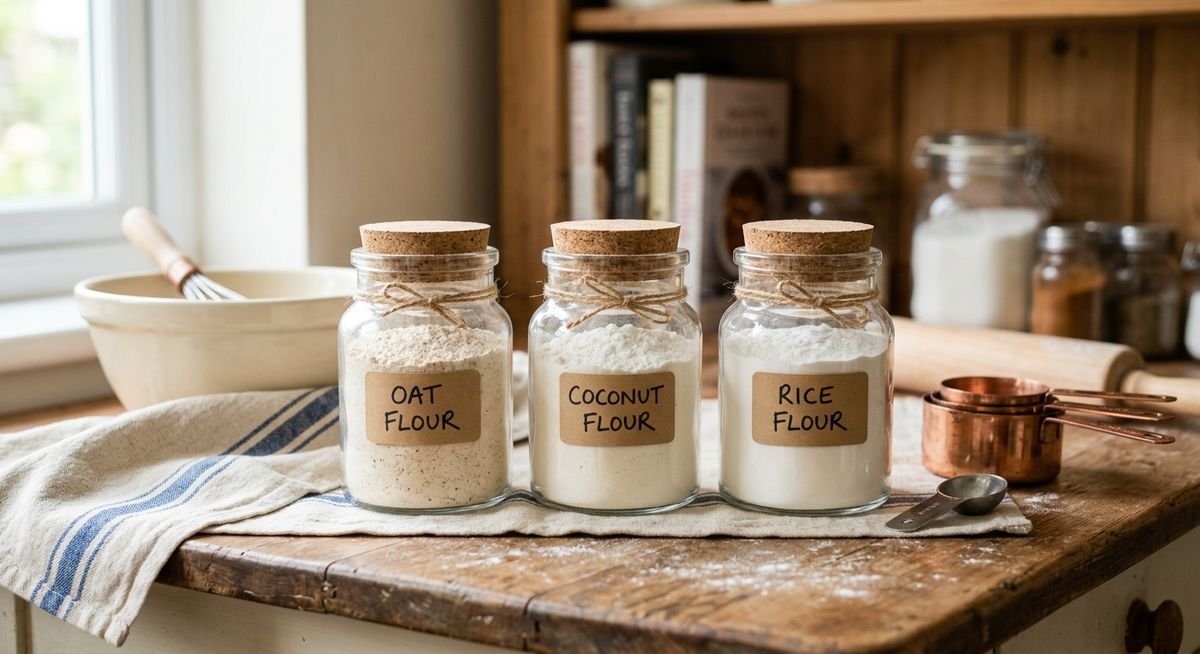
Oat Flour
Oat flour works at a 1:1 ratio in cookies, muffins, and pancakes with results that are slightly chewier and less rich than almond flour. The mild flavor disappears into banana bread batter entirely. Certified gluten-free oat flour from brands like Bob’s Red Mill is processed in dedicated facilities to prevent cross-contamination.
That fat difference between oat flour and almond flour matters in recipes relying on almond flour for moisture. Adding a tablespoon of oil or an extra egg yolk compensates effectively. Two cups of rolled oats in a food processor for 30 seconds yields about one cup of oat flour, making this the cheapest substitute on the list.
Coconut Flour
Coconut flour is the most ratio-sensitive swap here. It absorbs roughly four times more liquid than almond flour, so the standard conversion is 1/4 cup coconut flour per 1 cup almond flour, plus one to two additional eggs and an extra splash of liquid. Skip that adjustment and the result comes out dense and crumbly.
Coconut flour carries a mildly sweet, tropical flavor that works well in chocolate muffins, spiced loaves, and coconut-forward recipes but reads as intrusive in delicate vanilla or citrus bakes. It is grain-free, gluten-free, and partially keto-friendly.
All-Purpose Wheat Flour
All-purpose flour, plain flour, normal flour, and white flour all refer to essentially the same product and substitute at a 1:1 ratio for almond flour in most conventional recipes. The result is denser, higher in carbohydrates, and contains gluten, which rules this swap out for anyone baking gluten-free, keto, or paleo. But for a quick fix when you have run out of almond flour mid-batch? Regular wheat flour is the simplest answer.
Rice Flour and Semolina
Rice flour is neutral-flavored and swaps at roughly 1:1 by weight. It produces a lighter, slightly crisper texture in cakes and cookies. Semolina works as an almond flour substitute when a denser, coarser crumb is acceptable, particularly in shortbreads, Italian-style cakes, and pastry crusts. Neither is keto-friendly. Both are widely available and budget-friendly.
Ground Almonds vs. Almond Flour
Ground almonds and almond flour are made from the same nut, but blanched almond flour is milled finer from skinless almonds while ground almonds are coarser and often include the skin. For rustic cakes, crumbles, and frangipane, ground almonds substitute directly with no ratio change. For macarons or delicate sponges, grinding ground almonds in a food processor for 30 to 45 seconds brings them closer to the required fineness.
“Almond flour and ground almonds are made of the same thing, however almond flour is typically milled a bit finer. They are absolutely interchangeable in most cake recipes, but using ground almonds in a macaron recipe can result in more textured shells.”
— r/AskBaking, a community of expert bakers known for no-nonsense technical advice (7 upvotes)
| Substitute | Ratio (per 1 cup almond flour) | Gluten-Free | Keto | Best For |
|---|---|---|---|---|
| Oat Flour | 1:1 | Yes (certified) | No | Cookies, muffins, banana bread, pancakes |
| Coconut Flour | 1/4 cup + extra eggs/liquid | Yes | Partial | Muffins, spiced loaves, keto bakes |
| All-Purpose Flour | 1:1 | No | No | Quick fix, conventional baking |
| Rice Flour | 1:1 by weight | Yes | No | Cakes, cookies, general baking |
| Semolina | 1:1 by volume | No | No | Shortbreads, pastry crusts, Italian cakes |
| Ground Almonds | 1:1 | Yes | Yes | Rustic cakes, crumbles, frangipane |
Keto and Low-Carb Almond Flour Alternatives
Coconut flour, flaxseed meal, and sunflower seed flour are the three strongest keto almond flour alternatives, each delivering under 6 grams of net carbs per serving while keeping recipes grain-free. Ratios differ significantly from standard almond flour, so adjusting before baking is non-negotiable.
Swapping almond flour out of a keto recipe entirely defeats the dietary purpose. Almond flour is already low-carb by design. The question is usually what to use when almond flour is unavailable or too expensive, not whether to abandon it for something high-carb.
“No, the almond flour is part of what makes it keto. You also can’t exchange the sugar substitute for real sugar, same reason. Making so many changes to a recipe for such a restrictive diet will make it difficult and it simply won’t taste the same.”
— r/AskBaking (20 upvotes)
Flaxseed Meal
Flaxseed meal contains roughly 0 to 1 gram of net carbs per 2 tablespoons, making it one of the leanest low-carb flour options on the market. It functions best as a binder rather than a straight volume replacement. For keto bread, a practical working blend is 50% coconut flour, 25% flaxseed meal, and 25% psyllium husk. Psyllium husk adds the elasticity and chew that keto breads typically lack without contributing meaningful carbs.
Sunflower Seed Flour
Sunflower seed flour delivers approximately 3 grams of net carbs per 1/4 cup and mirrors almond flour’s texture more closely than most alternatives. It substitutes at a near 1:1 ratio and doubles as a nut-free option. One critical detail: sunflower seeds contain chlorogenic acid, which reacts with baking soda to turn baked goods green. Adding 1 teaspoon of lemon juice per cup of sunflower seed flour neutralizes the reaction completely.
Protein Powder as a Partial Substitute
Whey or pea protein powder can replace up to 25% of almond flour in keto pancakes and muffins, adding protein without spiking carbs. Going beyond 25% produces a rubbery, chalky texture. Protein powder lacks fat and binding power, so it works only as a partial swap blended with coconut or sunflower seed flour, never as a full replacement.
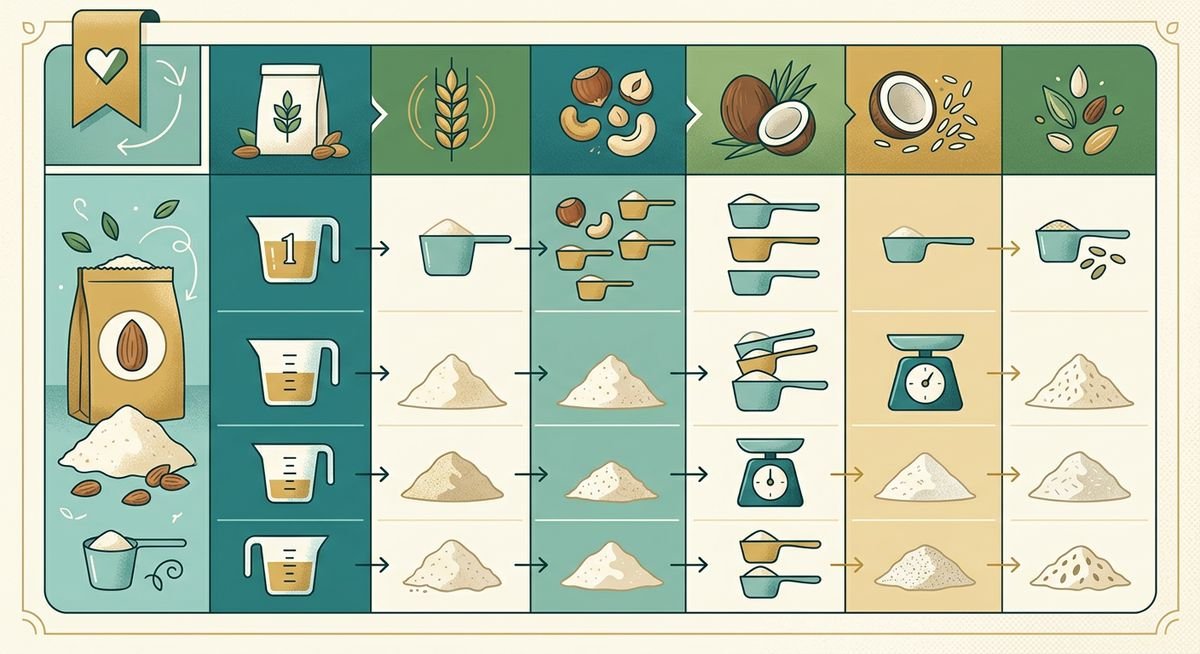
| Keto Flour | Net Carbs (per 1/4 cup) | Ratio vs. Almond Flour | Best Keto Use |
|---|---|---|---|
| Almond Flour (baseline) | ~6g | 1:1 | Cookies, muffins, pancakes |
| Coconut Flour | ~6g | 1/4 cup + extra eggs | Pancakes, muffins, keto bread |
| Flaxseed Meal | 0-1g (per 2 tbsp) | Blend only (25% of mix) | Binder in keto bread |
| Sunflower Seed Flour | ~3g | Near 1:1 | Cookies, muffins, nut-free keto |
Nut-Free Almond Flour Alternatives for Allergy-Safe Baking
Oat flour, cassava flour, chickpea flour, and sunflower seed flour are the four most reliable nut-free almond flour substitutes. None contains tree nuts, though cross-contamination risk varies by brand and processing facility. Food Allergy Research & Education (FARE) recommends verifying facility allergen statements on packaging, not just ingredient lists, when managing a tree nut allergy.
Cassava Flour
Cassava flour is grain-free, gluten-free, and completely nut-free with a neutral flavor that disappears into most recipes. It substitutes at roughly 1:1 in baked goods, making cassava flour one of the easiest almond flour alternatives for nut allergy households. The trade-off is carbohydrates: about 26 grams of net carbs per 1/4 cup. Cassava flour is paleo-friendly but not keto.
Chickpea Flour
Chickpea flour brings roughly 6 grams of protein per 1/4 cup, making it one of the more nutritious nut-free swaps. Use 3/4 cup chickpea flour per 1 cup of almond flour. The earthy, slightly beany flavor suits savory flatbreads, fritters, meatballs, and pancakes better than delicate sweet bakes. Chickpea flour works well as an almond flour substitute for meatballs and meatloaf, binding the mixture while adding protein.
Arrowroot, Tapioca, and Cornstarch
These starches do not replace almond flour on their own, but they serve as critical supporting ingredients in gluten-free and nut-free flour blends. Arrowroot and tapioca starch add lightness and chew to heavier flours like cassava or buckwheat. A common nut-free blend: 2 parts rice flour, 1 part tapioca starch, and a pinch of xanthan gum. These work especially well in cookies and pie crusts where a flaky, tender texture matters.
Buckwheat Flour
Despite its name, buckwheat is not related to wheat and contains no gluten or tree nuts. It has a distinctive earthy, slightly nutty flavor that works beautifully in pancakes, crepes, and dark-flavored bakes like gingerbread. Buckwheat flour substitutes at 1:1 for almond flour in recipes where its strong flavor is an asset rather than a distraction.
Almond Flour Substitutes for Specific Recipes
A substitute that works perfectly in cookies may fail completely in macarons. Recipe type dictates the swap, not the other way around.
Macarons
Macarons are the hardest recipe to substitute. Blanched almond flour gives macarons their signature smooth shell and delicate interior. Sunflower seed flour is the closest alternative, used at a 1:1 ratio, but the chlorogenic acid reaction demands the lemon juice fix. Pumpkin seed flour has also gained traction in the macaron community. Neither produces shells identical to almond flour macarons. Ground almonds processed very fine in a food processor come closer than any non-almond option.
Oat flour handles cookies best at a 1:1 ratio, producing a slightly chewier result. For cake, cassava flour or a cup-for-cup gluten-free blend (King Arthur Measure for Measure is widely recommended) delivers the closest crumb structure. Hazelnut flour swaps 1:1 for almond flour in cakes and adds a richer, toastier flavor profile.
Meatballs, Meatloaf, and Breading
Almond flour works as a binder and coating in savory recipes. For meatballs and meatloaf, chickpea flour or oat flour substitute at 1:1 and hold moisture just as well. For breading and panko replacement, crushed pork rinds (keto), panko bread crumbs (conventional), or finely ground sunflower seeds all coat and crisp effectively in place of almond flour.
Pancakes and Bread
Oat flour makes the simplest almond flour substitute for pancakes at a 1:1 swap. For keto pancakes specifically, coconut flour with extra eggs or a coconut-flaxseed blend produces the best texture. For bisquick-based recipes, a cup-for-cup gluten-free baking mix is the closest functional match, since bisquick already contains leavening agents that almond flour does not replicate. Bread requires more structural support than any single substitute can provide. A blend of coconut flour, psyllium husk, and flaxseed meal (the 50/25/25 ratio mentioned above) outperforms any single-flour approach for keto bread.
“If you want to make a cake, find a recipe for that cake. You cannot just substitute nut flour for regular flour — it is a completely different sponge with different ratios.”
— r/AskBaking (33 upvotes)
Master Almond Flour Substitution Ratio Chart
Every substitute ratio in this article consolidated into one reference. Ratios are per 1 cup of almond flour unless noted otherwise. Adjustments assume a standard baking recipe (cookies, muffins, or cake) as the baseline.
| Substitute Flour | Ratio per 1 Cup Almond Flour | Extra Adjustments | Gluten-Free | Keto | Nut-Free |
|---|---|---|---|---|---|
| Oat Flour | 1 cup | Add 1 tbsp oil for moisture | Yes (certified) | No | Yes (check facility) |
| Coconut Flour | 1/4 cup | Add 1-2 extra eggs + liquid | Yes | Yes | Yes |
| All-Purpose Flour | 1 cup | Reduce added fat slightly | No | No | Yes |
| Cassava Flour | 1 cup | None in most recipes | Yes | No | Yes |
| Sunflower Seed Flour | 1 cup | Add 1 tsp lemon juice per cup | Yes | Yes | Yes |
| Rice Flour | 1 cup (by weight) | May need extra binding agent | Yes | No | Yes |
| Flaxseed Meal | Blend only (25% of mix) | Combine with coconut flour | Yes | Yes | Yes |
| Chickpea Flour | 3/4 cup | Strong flavor; best savory | Yes | No | Yes |
| Hazelnut Flour | 1 cup | Richer, toastier flavor | Yes | Yes | No (tree nut) |
| Buckwheat Flour | 1 cup | Strong earthy flavor | Yes | No | Yes |
| Semolina | 1 cup | Reduce fat; denser crumb | No | No | Yes |
| Tapioca Starch | Blend only (1/3 of mix) | Add to rice or cassava flour | Yes | No | Yes |
| Arrowroot Powder | Blend only (1/3 of mix) | Lightens heavier flours | Yes | Partial | Yes |
| Ground Almonds | 1 cup | Coarser; process finer for delicate bakes | Yes | Yes | No (tree nut) |
| Corn Flour | 3/4 cup | Best in savory; distinct flavor | Yes | No | Yes |
Frequently Asked Questions
Is almond flour a healthy alternative to regular flour?
Almond flour is lower in carbohydrates, higher in protein, and richer in healthy fats than all-purpose wheat flour. It is naturally gluten-free and provides vitamin E and magnesium. For people managing blood sugar, almond flour’s lower glycemic impact makes it a practical choice. According to the Mayo Clinic, gluten-free flours including almond flour can be part of a balanced diet when used thoughtfully. The main drawback is calorie density: almond flour packs roughly 640 calories per cup versus 455 for all-purpose flour.
Can almond flour replace all-purpose flour?
Almond flour can replace all-purpose flour in many recipes, but not at a simple 1:1 swap. Almond flour lacks gluten, which means baked goods will not rise or hold structure the same way. Typically, use 1 cup of almond flour for 1 cup of all-purpose flour, add an extra egg for binding, and expect a denser, moister result. Recipes that rely heavily on gluten structure, like yeasted breads, do not adapt well.
Can almond flour replace bread crumbs?
Almond flour works as a bread crumb or panko substitute for coating and binding in savory dishes. Use a 1:1 ratio. The result is lower in carbohydrates and produces a slightly softer crust than traditional bread crumbs. For a crunchier finish, toast the almond flour in a dry pan for 2 to 3 minutes before using.
What is the best almond flour alternative for keto?
Coconut flour and sunflower seed flour are the two strongest keto alternatives. Coconut flour at 1/4 cup per cup of almond flour keeps carbs low but requires extra eggs. Sunflower seed flour substitutes at near 1:1 and is also nut-free. A blended approach using coconut flour, flaxseed meal, and psyllium husk produces the best results for keto bread specifically.
What is the coconut flour to almond flour ratio?
Use 1/4 cup of coconut flour for every 1 cup of almond flour. Coconut flour is approximately four times more absorbent, so the ratio is never 1:1. Add one extra egg and 2 to 3 tablespoons of additional liquid per 1/4 cup of coconut flour. Failing to make this adjustment results in a dry, crumbly bake that will not hold together.
Is almond flour a good alternative for diabetics?
Almond flour has a lower glycemic index than wheat flour and contains fewer net carbohydrates per serving. These properties make almond flour a practical option for people managing type 2 diabetes. It is not carb-free, however. A 1/4 cup serving contains roughly 3 grams of net carbs and 6 grams of protein, which helps moderate blood sugar response compared to grain-based flours.
What is the difference between almond flour and coconut flour?
Almond flour is high in fat (56g per cup), moderate in protein, and produces a moist, dense crumb. Coconut flour is very high in fiber, highly absorbent, and produces a lighter but drier texture unless extra liquid and eggs are added. Coconut flour has a mild tropical flavor. Almond flour tastes neutral to slightly sweet. They are not interchangeable at a 1:1 ratio in any recipe.
What is a cheaper alternative to almond flour?
Oat flour is the cheapest alternative: two cups of rolled oats blended for 30 seconds yields one cup of oat flour at a fraction of almond flour’s cost. Cassava flour and rice flour are also significantly more affordable. For keto bakers on a budget, buying whole raw sunflower seeds in bulk and grinding them produces sunflower seed flour at roughly one-third the cost of pre-packaged almond flour.
Where to find almond flour substitutes in the UK?
In the UK, blanched almond flour can be difficult to source outside specialty retailers. Ground almonds are the standard supermarket product and work in most recipes with minor texture differences. Doves Farm and Bob’s Red Mill gluten-free flour blends are widely available at Tesco, Sainsbury’s, and online retailers. Coconut flour and oat flour are stocked by most major UK supermarkets.
Can almond flour replace cornstarch?
Almond flour does not replace cornstarch as a thickening agent. Cornstarch is a pure starch that thickens liquids; almond flour is a nut-based flour with no thickening properties. For thickening sauces or gravies in a low-carb context, xanthan gum or a small amount of arrowroot powder are the appropriate substitutes. For breading and coating, almond flour and cornstarch are closer to interchangeable.
Conclusion
Three substitute categories cover nearly every baking scenario. Everyday swaps like oat flour and cassava flour handle most standard recipes at a 1:1 ratio. Keto-friendly options, including coconut flour, flaxseed meal, and sunflower seed flour, keep carbs low without sacrificing structure. Nut-free alternatives, especially sunflower seed flour and chickpea flour, solve the allergy problem without compromising too much on texture.
The most reliable approach is testing one new substitute at a time in a recipe you already know well. Swapping oat flour into your usual muffin recipe, for example, reveals more than any chart ever could. The ratio table above is designed as a quick reference for exactly that kind of real-world testing.