

DoorDash pays most drivers between $15 and $25 per hour before expenses, but at least six other delivery apps consistently match or beat that range in the same markets. The real variable is not which app you pick first. It is how quickly you learn which combination of platforms, time slots, and vehicle types generates the highest net hourly rate in your specific zip code.
“There was a time just last year when I could work 6 hours a day, 30 hours a week and earn 600-700 a week. Now it has dried up and what better time than when I’m laid off from my main job at the same exact time? I am out of options and out of income.”
— r/doordash_drivers, 2025 (207 upvotes)
That frustration is real, but so is the other side. Gig delivery earnings are brutally location-dependent. A driver clearing $22/hr on Instacart in suburban Dallas might struggle to break $14/hr on the same app in rural Missouri. That gap makes platform selection the single highest-leverage decision a new gig worker faces.
Below is a side-by-side breakdown of the best apps like DoorDash to make money in 2026, organized by category, with real earnings ranges, payout speed, vehicle requirements, and the multi-app stacking strategies that experienced drivers use to push past $25/hr.
Top Delivery App Earnings Compared Side by Side
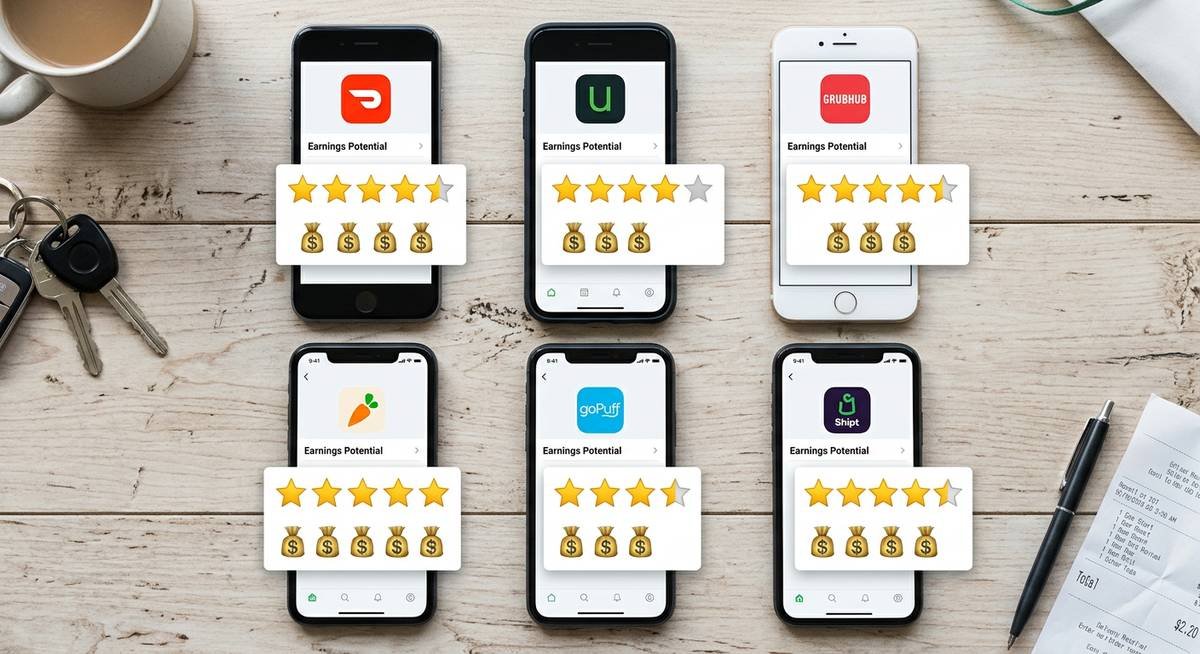
Uber Eats, Instacart, and Amazon Flex regularly outpay DoorDash in mid-size and large metro areas, with hourly rates ranging from $15 to $28 depending on market density and time of day. The table below pulls from driver-reported data across platforms like Gridwise, gig worker subreddits, and app disclosures to give you a realistic earnings snapshot rather than marketing claims.
| App | Avg. Hourly Pay (incl. tips) | Vehicle Needed | Same-Day Payout | Sign-Up Bonus Range |
|---|---|---|---|---|
| Uber Eats | $15 – $22 | Car, bike, scooter, on foot | Yes (Instant Pay, $0.85 fee) | Up to $500 guarantee |
| Instacart | $16 – $25 | Car required | Yes (Instant Cashout) | $50 – $100 promos |
| Amazon Flex | $18 – $25 | Mid-size car or larger | No (bi-weekly deposit) | Referral bonuses only |
| Grubhub | $14 – $20 | Car or bike (dense cities) | Yes (Instant Cash Out) | Up to $500 new-driver guarantee |
| Spark Driver (Walmart) | $14 – $20 | Car required | Yes (via Branch app) | Market-dependent |
| Shipt | $16 – $22 | Car required | Yes (via Payfare) | Regional promos |
| Gopuff | $13 – $18 | Car required | Yes (Instant Pay) | City-dependent |
| Roadie (UPS) | $15 – $25 | Car, SUV, or truck | No (weekly deposit) | None standard |
| Favor | $12 – $18 | Car or bike (Texas only) | Yes (tips same-day) | Limited promos |
| DoorDash | $15 – $25 | Car, bike, scooter, on foot | Yes (Fast Pay, $1.99 fee) | Up to $500 guarantee |
Amazon Flex stands out because of its block-based pay structure. Drivers reserve 3- to 6-hour delivery blocks in advance and earn a flat rate regardless of how many packages they deliver. That removes the per-order gambling that makes food delivery income unpredictable. Roadie, now a UPS subsidiary, pays $8 to $100+ per delivery depending on item size, which makes it one of the few gig apps where a single drop can cover an entire afternoon.
Location matters more than the app
One consistent theme across driver communities is that your market determines your income far more than the platform itself.
“Sounds like just a bad area. I recently started DoorDash and UberEats and get a solid stream of decent orders. I’d hesitate telling people not to bother when it’s a very area-dependent thing.”
— r/beermoney, 2025 (30 upvotes)
A driver in Austin running Uber Eats during SXSW week and a driver in rural Iowa using the same app on a Tuesday afternoon are effectively working two different jobs.
Urban areas with dense restaurant and grocery clusters generate more orders per hour. Suburban zones with longer distances between stops can pay more per delivery but fewer deliveries per hour. Before committing to any single platform, test two or three in your area during peak windows for at least one full week.
Best Delivery Apps by Category: Food, Grocery, and Packages
The highest-earning drivers match their vehicle type and schedule to the right category of delivery work rather than defaulting to whatever app their friends use. Food delivery, grocery shopping, and package logistics each have different pay structures, time commitments, and vehicle requirements.
Food delivery: Uber Eats, Grubhub, and Favor
Uber Eats calculates pay using a per-mile, per-minute formula on top of a base fare. Longer suburban runs often pay better than short urban ones because of the distance multiplier. Grubhub uses a per-order model with minimum hourly guarantees in some markets, which provides a floor during slow periods.
Favor operates exclusively in Texas and has lower name recognition, but Texas-based drivers consistently report strong tip culture on the platform. All three apps allow bike and scooter deliveries in dense city cores, making them accessible to drivers without a car.
Peak demand across food delivery apps follows a predictable pattern: weekday lunch from 11 a.m. to 1 p.m., Friday through Sunday dinner from 5 to 9 p.m., and any day with bad weather. Rain and snow reduce driver supply while spiking order volume, which triggers surge pricing on Uber Eats and higher base pay on Grubhub.
Grocery delivery: Instacart, Shipt, and Gopuff
Instacart and Shipt both use batch ordering, where multiple customer orders get grouped into a single shopping trip. This compresses drive time and boosts effective hourly pay. On Instacart, shopper ratings directly control batch visibility. Dropping below a 4.7 rating restricts access to high-paying orders.
Gopuff works differently. Drivers pick up pre-packed orders from a Gopuff warehouse instead of shopping in a store, which eliminates aisle time entirely. The trade-off is lower per-delivery pay ($5 to $9) but faster turnaround between orders. In college towns and dense urban areas, Gopuff drivers can complete 3 to 4 deliveries per hour.
Drivers who have tried both platforms tend to agree on which one wins for grocery work. As one r/beermoney user (2025) noted: “Instacart uses less gas because for obvious reasons people order more groceries at once.” Suburban markets tend to favor Instacart and Shipt because larger basket sizes mean bigger tips. A single Instacart batch with two orders can pay $30 to $45 including tips, and experienced shoppers complete them in 45 to 60 minutes. If you are looking for apps like Shiftsmart that offer flexible gig scheduling, grocery delivery platforms provide a similar on-demand work model.
| App | In-Store Shopping Required? | Batch Orders Available? | Best Market Type |
|---|---|---|---|
| Instacart | Yes | Yes (multi-customer) | Suburban |
| Shipt | Yes | Yes | Suburban / Mid-size |
| Gopuff | No (warehouse pickup) | No | Urban / College towns |
Package logistics: Amazon Flex, Spark Driver, and Roadie
Package delivery apps trade the constant ping-chasing of food delivery for structured block schedules and flat-rate pay. Amazon Flex pays $18 to $25 per block, and drivers reserve blocks through the app up to a week in advance. Most routes involve 30 to 50 package stops within a defined geographic zone. A mid-size sedan handles standard routes, but XL blocks covering bulky Amazon items require an SUV or cargo van.
Spark Driver handles Walmart and Sam’s Club deliveries using a similar block model. Roadie specializes in oversized items that standard couriers will not touch. A single Roadie delivery of a large appliance or piece of furniture can pay $50 to $100, making it the highest per-drop payer on this list for drivers with trucks or SUVs.
The Bureau of Labor Statistics (2024) projects that delivery and courier roles will grow 12% through 2032, roughly double the average for all occupations. Package logistics is absorbing a growing share of that demand as e-commerce volumes climb.
How to Maximize Earnings Across Multiple Apps
Experienced gig drivers earn 20% to 40% more than single-app drivers not by working longer hours but by running two apps simultaneously, targeting peak windows, and stacking sign-up bonuses in sequence. These three tactics are widely discussed in communities like r/couriersofreddit and r/doordash_drivers but rarely documented together.
Running two apps at once (multi-apping)
Multi-apping means keeping two delivery apps active simultaneously and cherry-picking the best-paying orders from both. The most common combination is Uber Eats plus DoorDash or Uber Eats plus Grubhub. Accept a solid order from one app, then grab a second order from the other only if the pickup and drop-off routes align.
The discipline that separates profitable multi-appers from stressed ones is aggressive order rejection. A $3.50 order that adds 15 minutes to your route costs more in lost opportunity than skipping it. Experienced drivers on r/couriersofreddit report that multi-apping boosts their hourly rate by $5 to $10, but only after they develop the instinct to decline bad orders instantly.
Peak hours and surge pricing windows
| Time Window | Demand Level | Best Platforms | Surge Pricing Likelihood |
|---|---|---|---|
| Weekday Lunch (11 a.m. – 1 p.m.) | High | Uber Eats, Grubhub, DoorDash | Moderate |
| Fri – Sun Dinner (5 – 9 p.m.) | Peak | All food delivery apps | High |
| Bad Weather (rain, snow, any day) | Peak | All food and grocery apps | Very High |
| Game Days / Local Events | High | Uber Eats, DoorDash, Instacart | High |
| Sunday Morning (9 – 11 a.m.) | Moderate | Instacart, Shipt (grocery) | Low |
Position yourself within a half-mile of a dense restaurant or grocery cluster before peak windows start. Waiting for the first ping from your couch means missing the initial surge orders, which are typically the highest-paying of the window. Bad weather days deserve special attention because order volume spikes while driver supply drops, creating the largest pay premiums of any recurring pattern.
Sign-up bonus stacking sequence
Most delivery apps offer new-driver guarantees structured as “complete X deliveries within Y days and earn at least $Z.” As of early 2026, Uber Eats and Grubhub both run guarantees up to $500 in competitive markets. The most efficient approach is sequential: join one platform, hit the bonus threshold, then sign up for the next.
Attempting three platforms simultaneously splits your delivery volume and risks missing every bonus deadline. After clearing two or three sign-up bonuses, referral income adds a passive layer. Each driver you refer who completes their own bonus threshold typically pays you $50 to $150.
Apps That Pay Without a Car
Not every delivery gig requires a vehicle. Uber Eats, DoorDash, and Grubhub all allow bike, scooter, and walking deliveries in dense urban markets. Bike couriers in cities like New York, Chicago, and San Francisco often earn comparable hourly rates to car drivers because shorter distances offset the per-mile disadvantage.
Beyond delivery, platforms like TaskRabbit and Rover open up entirely different earning categories. TaskRabbit connects workers with local tasks ranging from furniture assembly to moving help, with average task pay of $30 to $60 per hour in major metros. Rover, the pet-sitting platform, generates steady recurring income. One Reddit user reported earning $1,500 to $2,000 per month from Rover alone, primarily through overnight dog boarding.
DoorDash also launched a new “Tasks” app in early 2026 that pays couriers for submitting audio and video clips to train AI and robotics models. This marked the first time a major delivery platform offered non-delivery earning opportunities through its ecosystem.
Taxes and Expenses Every Gig Driver Should Track
Every dollar earned through delivery apps is 1099 independent contractor income, and the IRS Gig Economy Tax Center is the authoritative starting point for understanding your obligations. Drivers who fail to track deductible expenses overpay their taxes by hundreds or thousands of dollars per year.
The standard mileage deduction for 2026 is $0.70 per mile. A driver logging 20,000 delivery miles per year can deduct $14,000 from their taxable income through mileage alone. Other deductible expenses include phone bills (the portion used for gig work), insulated delivery bags, parking fees, and tolls. Apps like Everlance and Stride automatically track mileage and categorize expenses, making quarterly estimated tax payments less of a headache.
“As someone who just finished doing GrubHub for 2 1/2 years while in between jobs — Run away. JK if you can guarantee it at a short term status it’s not a bad gig. But after 2 1/2 years of struggling to find a job, my car is now in the shop because I put over 50,000 miles on it driving for work.”
— r/couriersofreddit, 2025
That 50,000-mile figure is not unusual. Vehicle depreciation and maintenance costs eat into gross earnings far more than most new drivers expect. If you need quick access to funds between paydays, apps like DoorDash Fast Pay and Uber Eats Instant Pay provide same-day access, but each transfer carries a $1 to $2 fee. For larger advances, apps like FloatMe or apps like Dave and Earnin offer small cash advances without interest.
Which App Should You Start With?
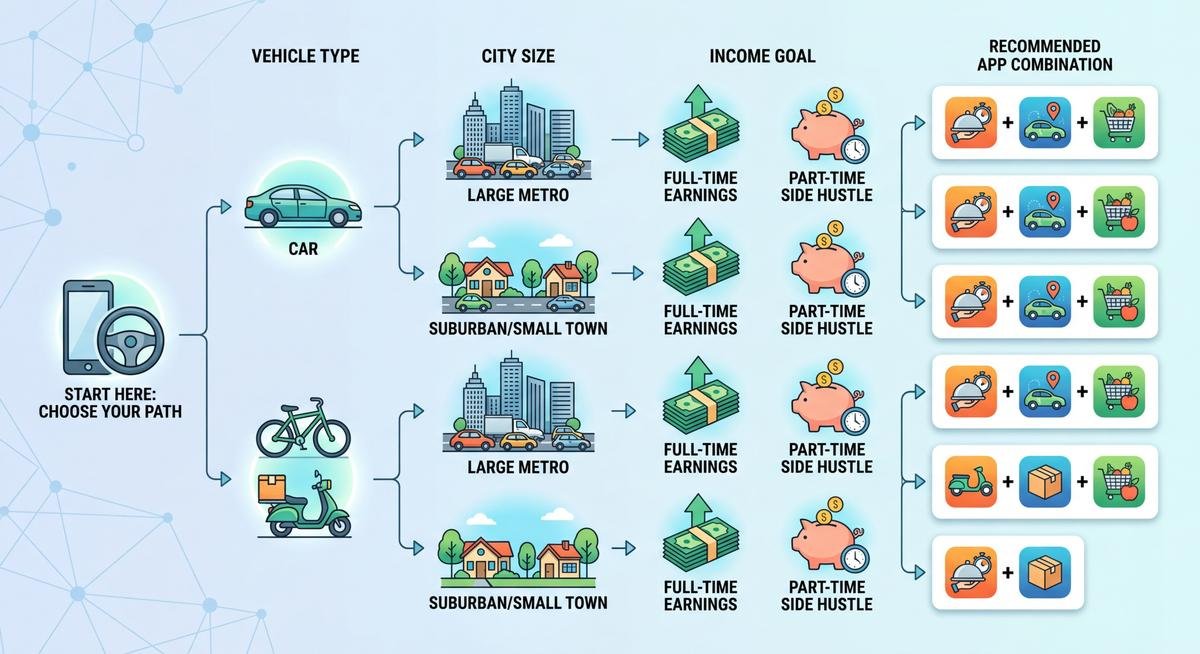
The best starting point depends on three variables: your vehicle, your market size, and how many hours per week you can commit. Use this quick decision framework rather than defaulting to whichever app has the most downloads.
- No car, urban area: Start with Uber Eats or DoorDash (both allow bike/walking delivery). Layer in TaskRabbit for non-delivery gigs.
- Standard car, suburban area: Start with Instacart (highest suburban pay). Add Uber Eats or Grubhub for food delivery during dinner peaks.
- SUV or truck: Start with Roadie or Amazon Flex XL blocks. Oversized item delivery pays $50 to $100 per drop with far less competition.
- Part-time (under 15 hrs/week): Focus on Friday-Sunday dinner peaks on a single food delivery app. Multi-apping only makes sense above 20 hours per week.
- Full-time: Stack Instacart mornings (grocery batches) with Uber Eats/Grubhub evenings (food delivery peaks). Add Amazon Flex blocks for guaranteed baseline income.
According to Ridester’s driver earnings analysis, drivers who operate on two or more platforms earn a median of 23% more per active hour than single-platform drivers, even after accounting for the extra time spent managing multiple apps.
Frequently Asked Questions
What delivery app pays the most per hour?
Amazon Flex and Instacart consistently pay the most among apps like DoorDash to make money, with drivers reporting $18 to $25 per hour on Amazon Flex and $16 to $25 per hour on Instacart in suburban markets. Roadie pays the most per individual delivery when handling oversized items, with single drops reaching $50 to $100. DoorDash typically falls in the $15 to $25 range depending on market and time of day.
Can you run multiple delivery apps at the same time?
Yes. Multi-apping is legal and widely practiced. No major delivery platform prohibits drivers from using a competing app concurrently. Running Uber Eats alongside Grubhub or DoorDash can increase hourly earnings by 20% to 40% according to driver community reports. The key discipline is rejecting low-value orders aggressively so that stacking two apps does not create routing conflicts.
Which delivery apps offer instant or same-day payout?
DoorDash (Fast Pay), Uber Eats (Instant Pay), Instacart (Instant Cashout), Grubhub (Instant Cash Out), Gopuff, Shipt, and Spark Driver all offer same-day or instant payout options. Transfer fees range from $0.50 to $1.99 per transaction. Amazon Flex does not offer instant transfer and pays via direct deposit on a bi-weekly cycle only.
Do you need a car to work delivery apps?
Not necessarily. Uber Eats, DoorDash, Grubhub, and Postmates allow bike, scooter, and walking deliveries in dense urban areas. Bike couriers in cities like New York and Chicago earn comparable hourly rates to car drivers on short-distance orders. Grocery and package delivery apps like Instacart, Amazon Flex, and Roadie do require a car.
How much can you realistically earn per week with delivery apps?
Full-time drivers (40+ hours per week) running two apps during peak windows typically report $800 to $1,500 per week before expenses. Part-time drivers working 15 to 20 hours during Friday through Sunday peaks earn $300 to $600 per week. Expenses including gas, maintenance, and depreciation reduce net earnings by roughly 25% to 35% depending on vehicle efficiency and local gas prices.
What are the best non-delivery apps to make money?
TaskRabbit pays $30 to $60 per hour for local tasks like furniture assembly, moving help, and handyman work. Rover generates $1,500 to $2,000 per month for experienced pet sitters. For quick cash needs between gig paydays, apps like Possible Finance provide emergency cash advances without traditional credit checks.
Final Take
No single app is the best choice for every driver. The right combination depends on your vehicle, your city, and how many hours you commit per week. Drivers who stack two or more platforms and time their shifts around peak demand windows consistently out-earn single-app drivers by 20% to 40%.
Start with one app from the earnings table, claim any available sign-up bonus, and run it for two to three weeks until the workflow feels automatic. Then layer in a second platform during peak hours. Same-day payout is available on nearly every major app covered here, so cash flow does not have to be a barrier to getting started.