


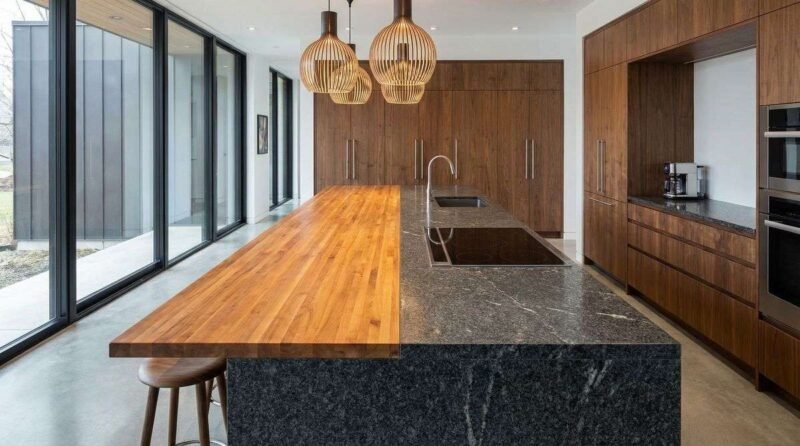
Kitchen islands have become the focal point of modern homes, serving as versatile spaces for cooking, dining, and gathering. The surface material chosen for this central feature significantly impacts both its aesthetic appeal and practical functionality. Among the most popular choices are butcher block and granite, each offering distinct advantages and characteristics. This article provides a comprehensive, unbiased comparison of these two materials, exploring their properties, maintenance needs, and suitability for various lifestyles, to guide your decision for the perfect kitchen island surface.
Understanding Butcher Block Countertops for Kitchen Islands
Answer Capsule: Butcher block offers a warm, natural aesthetic and a forgiving surface for direct food preparation, making it a favorite for those seeking rustic charm and a hands-on cooking experience on their kitchen island.
Crafted from strips of wood glued together, butcher block countertops infuse any kitchen with undeniable warmth and organic beauty. Their natural grain patterns and rich tones transform a kitchen island into a welcoming centerpiece, particularly complementing farmhouse, rustic, or Scandinavian designs. Beyond aesthetics, butcher block surfaces are uniquely functional: they are exceptionally kind to knives, allowing direct food preparation without dulling blades, thus eliminating the need for a separate cutting board. The initial investment for butcher block is often considerably lower than for natural stone options like granite, making it an attractive choice for budget-conscious homeowners. Minor damages, such as scratches or shallow cuts, are easily repairable through light sanding and re-oiling, extending the surface’s lifespan.
However, wood’s inherent nature presents challenges. Butcher block demands consistent maintenance, primarily regular oiling and occasional sealing, to protect against moisture and prevent drying, cracking, or warping. Its porous surface, if not meticulously maintained, is susceptible to stains from liquids like wine or coffee and can harbor bacteria if not properly cleaned after food preparation. Wood is also less heat-resistant than stone; hot pots can leave scorch marks or cause irreversible damage. While durable, butcher block is softer than granite, making it more prone to nicks, dents, and scratches from heavy use, though these are generally repairable.
Exploring Granite Countertops for Kitchen Islands
Answer Capsule: Granite provides a luxurious, durable, and low-maintenance surface that stands up to heat and moisture, making it an excellent choice for busy kitchen islands where resilience and elegance are paramount.
Granite, a natural igneous rock, has long signified luxury and durability in kitchen design. Each granite slab is a unique work of art, with distinct patterns, specks, and veins varying in color and intensity, from subtle grays to dramatic blacks. This natural variation ensures every granite island is one-of-a-kind, offering a sophisticated, timeless aesthetic that suits both modern and traditional kitchens. Functionally, granite is celebrated for its exceptional hardness and scratch resistance, ideal for high-traffic kitchen islands. When properly sealed, it is highly resistant to heat, allowing hot cookware directly on its surface, and effectively repels moisture, minimizing stain risks. Its robust nature ensures impressive longevity, often lasting decades with minimal wear.
Despite its advantages, granite has considerations. Its initial cost, including material and professional installation, is typically higher than butcher block. Its significant weight requires sturdy cabinetry and specialized installation, increasing labor costs. While generally low-maintenance, granite needs periodic sealing, usually annually, to maintain stain resistance and protect its porous surface. Neglecting this can lead to liquid penetration and discoloration. Though highly durable, severe impacts can cause chips or cracks, which usually require professional, often costly, repair.
Direct Comparison: Butcher Block vs. Granite for Your Island
Answer Capsule: The choice between butcher block and granite for a kitchen island hinges on balancing aesthetic preference, lifestyle, budget, and willingness to commit to specific maintenance routines.
To clarify which material best suits your kitchen island, here’s a direct comparison across key criteria:
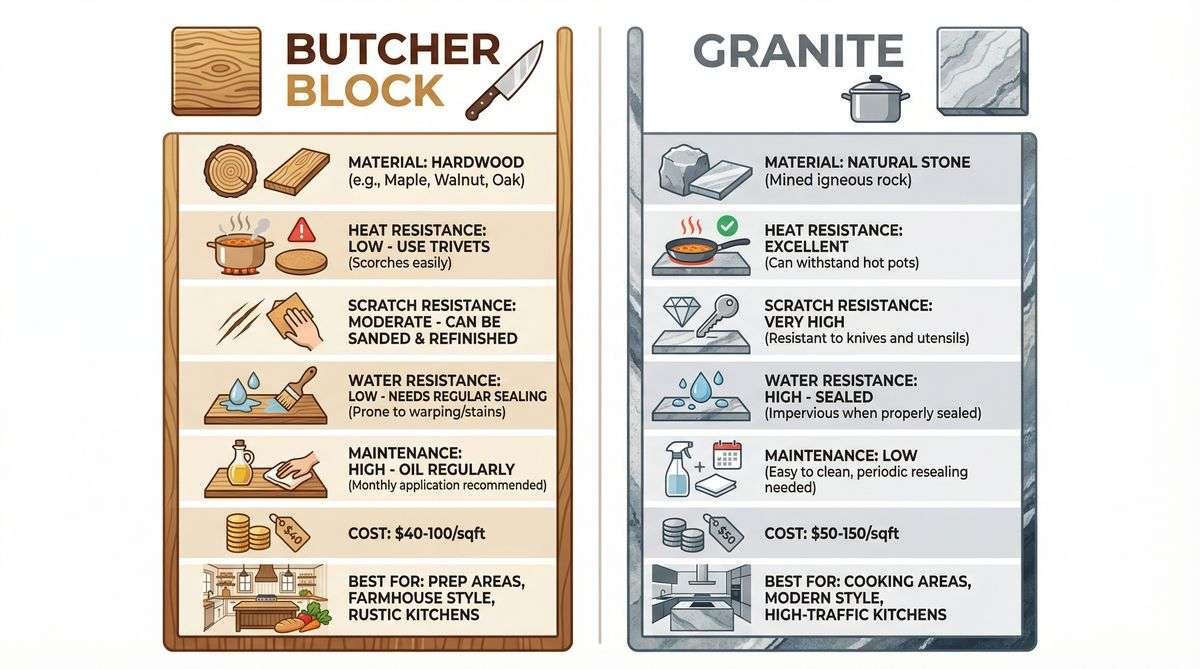
| Feature | Butcher Block | Granite |
|---|---|---|
| Appearance | Warm, natural, rustic; various wood types and grain patterns | Luxurious, elegant, unique natural patterns; wide range of colors |
| Durability | Softer, prone to scratches/dents; can warp/crack if not maintained | Very hard, highly scratch-resistant; can chip/crack from severe impact |
| Maintenance | High: regular oiling (monthly), occasional sealing, immediate wipe-ups | Low: annual sealing, daily cleaning with mild soap |
| Cost | Lower initial cost (material + installation) | Higher initial cost (material + professional installation) |
| Heat Resistance | Low: susceptible to scorch marks and damage from hot items | High: generally withstands hot pots/pans without damage |
| Water Resistance | Low: prone to stains, warping, and bacteria if not sealed/oiled | High (when sealed): resists moisture and stains |
| Food Prep | Excellent: knife-friendly, can cut directly on surface | Not recommended: dulls knives, can chip |
| Repairability | High: minor scratches/cuts can be sanded and re-oiled | Moderate: chips/cracks require professional repair |
| Environmental Impact | Renewable resource, often sustainably sourced | Natural stone, quarrying has environmental impact; very long lifespan |
| Resale Value | Can be polarizing; appeals to specific buyers, may require more upkeep | Generally high; widely perceived as premium and desirable |
Lifestyle and Usage: Which Material Suits Your Kitchen Island?
Answer Capsule: Your daily kitchen habits and priorities—whether it’s frequent direct food prep, minimal upkeep, or a specific design aesthetic—will largely dictate whether butcher block or granite is the superior choice for your island.
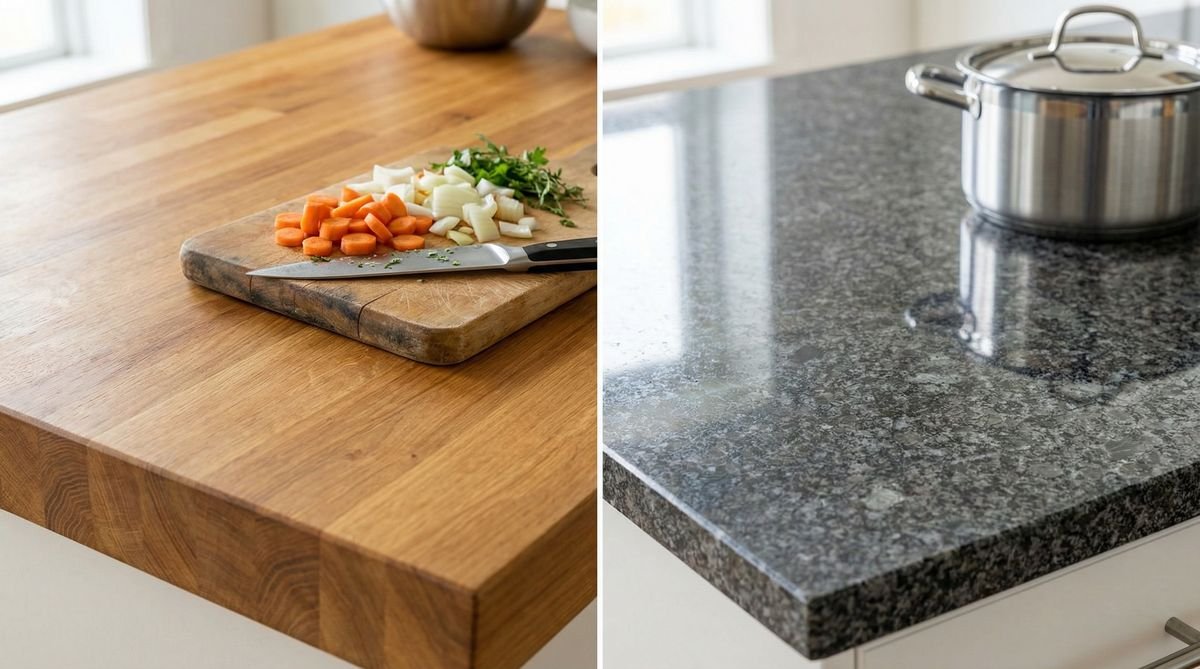
Choosing the right kitchen island surface is deeply personal, aligning with your lifestyle and intended use. For those envisioning their island as a dynamic culinary workstation—chopping vegetables, kneading dough, preparing meals directly on the surface—butcher block is unparalleled. Its knife-friendly nature and repairability make it ideal for active home cooks. If your design preference leans towards warm, inviting, and character-rich aesthetics like farmhouse, rustic, or cottage styles, butcher block seamlessly enhances that vision. It also offers a more budget-friendly initial investment. Homeowners who appreciate caring for natural materials and seeing a unique patina develop over time will find butcher block immensely rewarding.
Conversely, granite is ideal for busy households demanding a highly resilient, low-fuss surface. If your kitchen island is a hub of constant activity—from homework and casual dining to entertaining and handling hot dishes—granite’s robust nature is an excellent fit. Its superior heat and stain resistance (when sealed) allows hot pans directly on it, offering peace of mind in a bustling environment. For those desiring a luxurious, sophisticated, or sleek modern aesthetic, granite’s diverse patterns and polished finish provide undeniable grandeur and permanence. It appeals to homeowners prioritizing minimal long-term maintenance, preferring annual sealing over more frequent care. The decision ultimately rests on how you live and what you value most in your kitchen’s central gathering point.
Maintenance & Longevity: Protecting Your Investment
Answer Capsule: Proper maintenance is crucial for both butcher block and granite to ensure their longevity and appearance, though the specific care routines differ significantly.
Consistent and appropriate maintenance is key to the longevity and pristine appearance of your kitchen island countertop. Butcher block care is more hands-on, centered on regular oiling. Monthly oiling is generally recommended, or more frequently in dry climates or with heavy use. Food-grade mineral oil or beeswax nourishes the wood, preventing drying and cracking, and enhancing water resistance. Daily cleaning requires mild soap and water, followed by thorough drying. Prompt spill cleanup is critical to prevent staining and moisture absorption. For sanitization after preparing raw meats, a diluted vinegar solution can be used, followed by re-oiling. Minor scratches and cuts are often removed by light sanding and re-oiling, renewing the surface.
Granite, while more forgiving, still requires attention. Periodic sealing is its most critical maintenance aspect. Most granite varieties benefit from an annual application of a penetrating sealer. To test for resealing, drop water beads on the surface; if they soak in, reseal. The process is straightforward: clean, apply sealer, allow penetration, and wipe excess. Daily cleaning uses a soft cloth with warm water and mild, pH-neutral cleaner. Avoid harsh chemicals, abrasives, and acidic substances, as they can strip sealer and etch the stone. While durable, granite can chip or crack from heavy impacts, especially near edges. Such damage typically requires professional repair, often with color-matched epoxy fillers.
Beyond the Surface: Cost, Installation, and Resale Value
Answer Capsule: Beyond aesthetics and durability, factors like initial cost, installation complexity, and potential impact on home resale value are critical considerations when selecting between butcher block and granite for a kitchen island.
When comparing butcher block and granite for your kitchen island, financial implications extend beyond the initial purchase. Butcher block typically has a lower upfront cost, ranging from $40 to $100 per square foot installed, making it attractive for tighter budgets. However, consider the long-term cost of ownership, including recurring maintenance products and time. Granite commands a higher initial investment, usually $70 to $200+ per square foot, depending on rarity and installation complexity. Despite this, its minimal ongoing maintenance (annual sealing) and exceptional longevity can result in lower long-term costs, as it rarely needs replacement.
Installation differs significantly. Butcher block, being lighter, can sometimes be a DIY project for experienced homeowners, especially for smaller islands. However, professional installation is recommended for proper sealing, leveling, and integration. Granite, due to its immense weight and fragility, almost always requires professional handling, involving precise measurements, specialized tools, and multiple strong individuals for safe transport and positioning. DIY granite installation is not advisable due to material damage and injury risks.
Resale value is another crucial factor. Granite has historically been a premium upgrade, enhancing market value and appeal. Its association with luxury and durability makes it a safe, desirable choice. Butcher block, while charming, can be polarizing. Some buyers appreciate its warmth; others view its maintenance as a drawback. If maximizing resale value is paramount, granite often offers a more universally accepted and value-adding choice for a kitchen island.
Unique Differentiating Module: Hygiene and Food Safety on Your Island
Answer Capsule: While both butcher block and granite can be safe for food preparation, understanding their unique hygienic properties and proper sanitization methods is key to maintaining a healthy kitchen island.
The kitchen island is often a primary food preparation surface, making hygiene and food safety paramount. For butcher block, direct cutting is a major draw, but raises sanitation questions. Research suggests that properly maintained wood can be surprisingly hygienic. Its porous nature can trap bacteria, which then die off due to lack of moisture and nutrients. This natural antibacterial property is most effective with regular oiling and immediate, thorough cleaning after use. Best practices include using separate areas for raw meats and vegetables, and sanitizing with a diluted bleach or vinegar solution (re-oiling after vinegar) after preparing raw ingredients. Regular sanding also removes surface bacteria and knife marks.
Granite, being non-porous when properly sealed, offers different hygienic advantages. Its smooth, impenetrable surface hinders bacterial penetration, making cleaning and sanitization straightforward. A simple wipe-down with warm, soapy water or a mild disinfectant suffices for daily cleaning. The key is maintaining a good seal, as an unsealed surface can become porous and susceptible to bacterial growth and staining. While granite isn’t knife-friendly, using a cutting board is always recommended to protect both knives and the countertop. Both materials can be safe for food preparation, but each requires specific cleaning and maintenance for a hygienic kitchen island.
FAQ Section: Your Kitchen Island Countertop Questions Answered
Answer Capsule: Addressing common concerns, this FAQ section provides quick answers to frequently asked questions about butcher block and granite countertops for kitchen islands, covering durability, maintenance, and practical use.
Q1: Can I really cut directly on a butcher block island without damaging it?
Yes, butcher block is designed as a cutting surface. While knife marks will appear over time, they can be sanded out and the surface re-oiled. For heavy-duty chopping, a separate cutting board is still recommended to preserve its pristine appearance.
Q2: How often do I need to oil my butcher block island?
Initially, oil weekly for the first month, then monthly for the first year, and quarterly thereafter. Frequency depends on usage and climate; re-oil if the wood appears dry.
Q3: Is granite truly stain-proof for a kitchen island?
When properly sealed, granite is highly resistant to stains, but not entirely stain-proof. Acidic liquids, oils, and dark foods left on an unsealed or poorly sealed surface can cause staining. Prompt cleanup is always best.
Q4: What happens if I put a hot pot directly on my butcher block island?
Placing hot pots directly on butcher block can cause scorch marks, discoloration, or even cracking and warping due to its low heat resistance. Always use trivets or hot pads.
Q5: Which material is better for a high-traffic kitchen island?
For a high-traffic kitchen island, granite is generally superior due to its exceptional durability, heat resistance, and lower maintenance requirements, easily withstanding heavy use.
Q6: Does butcher block warp on a kitchen island?
Butcher block can warp if exposed to excessive moisture or humidity without proper sealing and oiling. Consistent maintenance is essential to prevent warping and ensure stability.
Q7: What’s the best way to clean a granite island?
For daily cleaning, use a soft cloth with warm water and a mild, pH-neutral cleaner. Avoid abrasive cleaners, acidic solutions, and harsh chemicals, which can damage the sealer and etch the stone.