



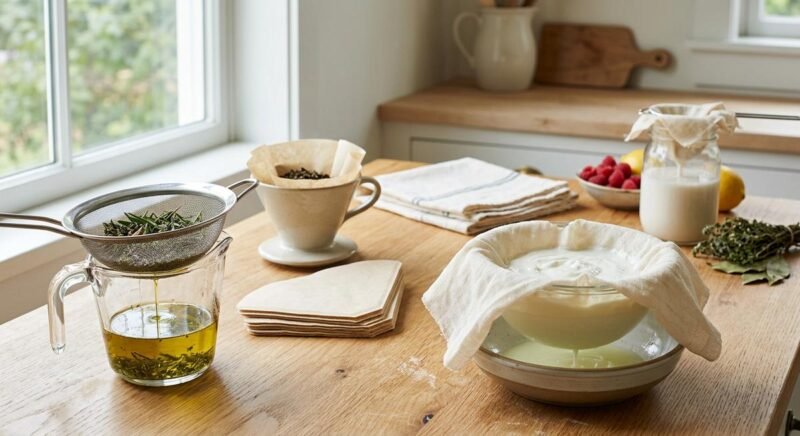
Muslin cloth, a nut milk bag, or a clean flour sack towel will all work as a cheesecloth alternative — and for most kitchen tasks, one of those three is already in your drawer. The right choice depends entirely on what you’re making, because cheesecloth isn’t one thing: it’s a food-grade, heat-tolerant woven fabric that comes in grades ranging from coarse (grade 10) to ultra-fine (grade 90), each suited to a different level of filtration.
That porosity difference is exactly why swapping in a paper towel works fine for draining ricotta but falls apart — literally — when you’re clarifying hot butter or steaming dumplings. The task dictates the substitute, not the other way around.
What follows is a use-case-organized breakdown of the best substitutes for straining, cooking, baking, and specialty brewing tasks — from cold brew and cannabutter to sourdough proofing and turkey roasting. A quick-reference comparison table up front covers porosity, heat tolerance, reusability, and cost so you can match the right stand-in to whatever recipe stopped you mid-step.
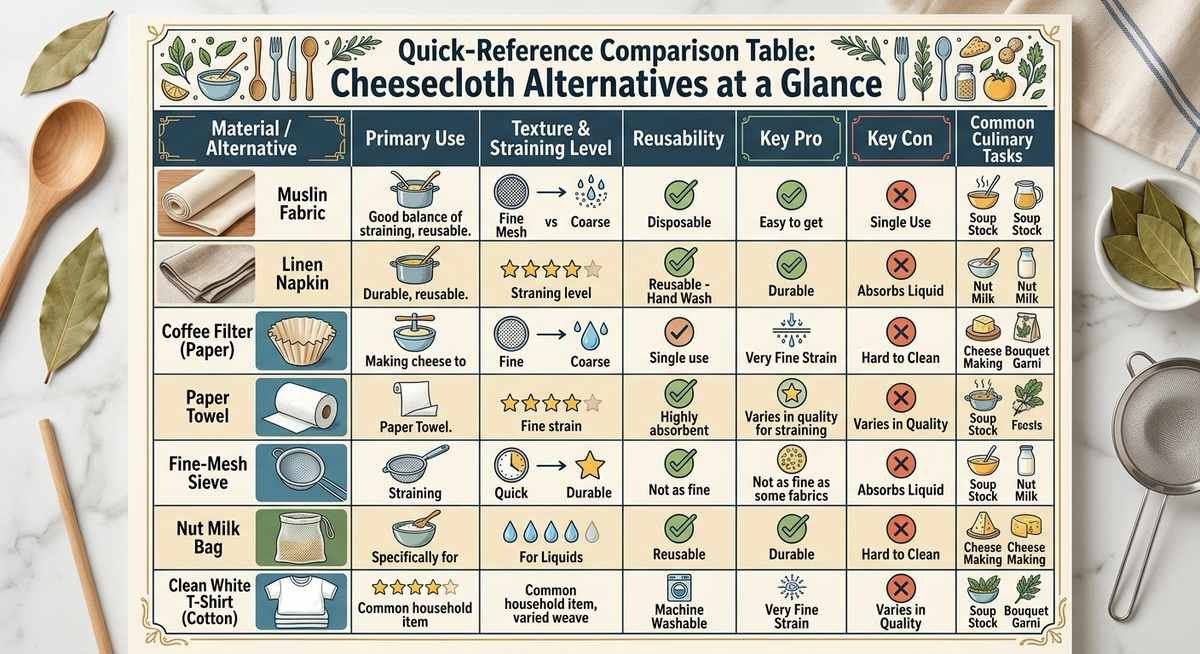
Quick-Reference Comparison Table: Cheesecloth Alternatives at a Glance
The best cheesecloth alternative depends entirely on the task — fine straining for yogurt demands something different from coarse bundling for a spice sachet. The table below maps every major substitute across five practical dimensions so you can match the right tool to the job in seconds. According to the FDA Food Ingredients & Packaging guidelines, any material that contacts food during preparation must be food-grade and free of chemical treatments — a standard several common substitutes fail to meet without verification.
| Alternative | Best Use Cases | Porosity Match (Cheesecloth Grade Equivalent) | Reusable? | Heat Safe? | Food-Grade Safe? |
|---|---|---|---|---|---|
| Butter Muslin | Yogurt, labneh, ghee, paneer, hung curd | Grade 60–90 (very fine) | Yes — wash and reuse indefinitely | Yes | Yes |
| Standard Muslin Cloth | Turkey roasting, sourdough liner, stock, spice sachets | Grade 40–60 (medium) | Yes | Yes | Yes (unbleached only) |
| Nut Milk Bag | Cold brew, cannabutter, nut milks, yogurt, clarified butter | Grade 50–80 (fine to very fine) | Yes — rinse after each use | No (nylon degrades above ~80°C / 176°F) | Yes (food-grade nylon or hemp only) |
| Fine Mesh Strainer | Stock, soup, sauces, rinsing grains | Grade 40–60 (medium) | Yes — stainless steel lasts years | Yes | Yes |
| Flour Sack Towel | Stock, turkey basting, sourdough proofing, general straining | Grade 30–50 (medium-coarse) | Yes | Yes | Yes (unbleached, unwashed with detergent) |
| Coffee Filter | Spice sachets, cold brew (backup), clarified butter (slow) | Grade 80–90 (very fine) | No — single use | Limited (paper degrades in boiling liquid) | Yes (unbleached preferred) |
| Linen Cloth | Sourdough banneton liner, fruitcake wrapping, straining | Grade 40–60 (medium) | Yes | Yes | Yes (natural, undyed) |
| Nylon Paint Strainer Bag | Cannabutter, large-batch cold brew, nut milks | Grade 50–70 (medium-fine) | Yes | No | Only if explicitly labeled food-grade |
| Paper Towel | Emergency light straining only | Grade 80–90 (very fine, but fragile) | No — single use | No — disintegrates under heat or pressure | Marginal (avoid bleached varieties) |
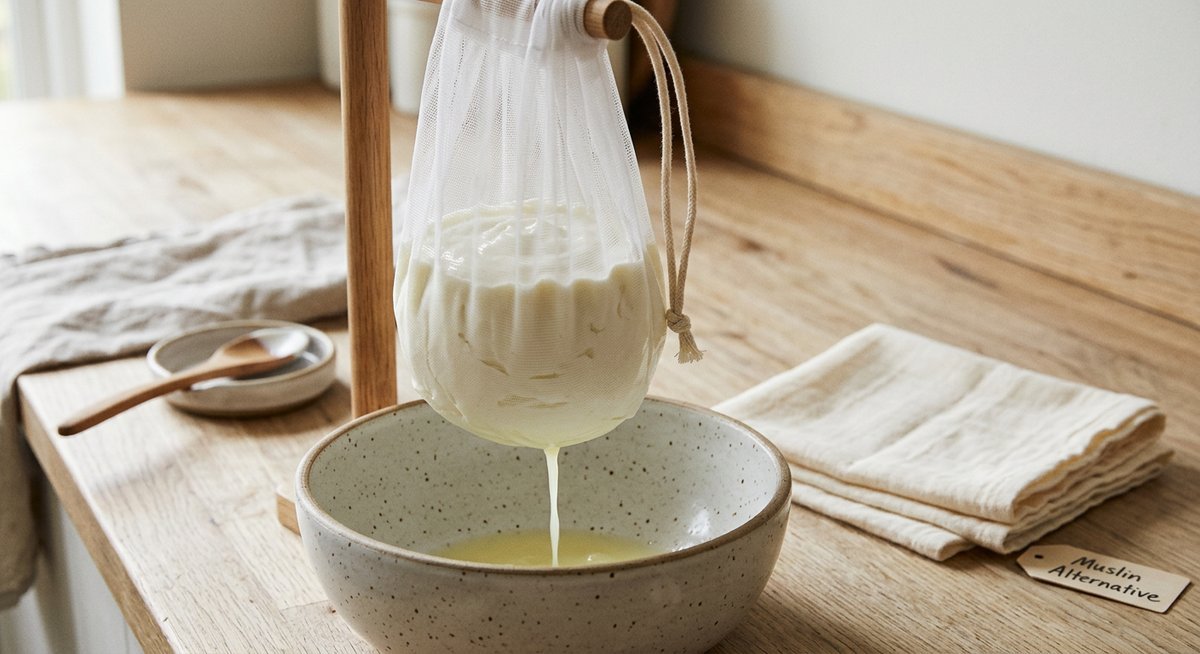
Two details most sources skip: cheesecloth itself is graded on a scale of 10 to 90, where a higher number means tighter weave and finer filtration — and matching that grade is what determines whether a substitute actually works. A flour sack towel handles a Grade 40 task effortlessly; it will frustrate you on a Grade 90 job like clarifying butter.
Best Cheesecloth Alternatives for Straining Tasks
Butter muslin is the best all-around cheesecloth alternative for straining — a tightly woven, food-grade cotton with a thread count around 90 that catches fine particles while still allowing liquid to pass at a controlled rate. For tasks where porosity matters less, a nut milk bag or a fine mesh strainer lined with a thin cotton towel covers most situations reliably. The right pick depends on what you’re straining and how fine the filtration needs to be.
Straining Yogurt, Labneh, and Hung Curd
Draining whey from yogurt is a slow, gravity-fed process that can take anywhere from two hours to overnight. The substitute fabric needs fine enough porosity to hold back curds without collapsing or tearing under sustained moisture — a standard kitchen paper towel fails this test quickly.
Butter muslin is the closest functional equivalent to cheesecloth for yogurt, labneh, paneer, and hung curd. Butter muslin’s tight weave holds the curd mass intact while whey drains cleanly through. A nut milk bag made from fine nylon or hemp mesh is a strong reusable runner-up — easier to clean than fabric and equally effective for straining hung curd or paneer.
Straining Clarified Butter and Ghee
Clarified butter requires the finest filtration of almost any kitchen straining task. Milk solids are tiny, and any that slip through will cause the finished ghee to burn at lower temperatures and spoil faster. A single layer of standard muslin won’t cut it here — butter muslin or a double-layered nut milk bag is the minimum.
Coffee filters work as a cheesecloth alternative for straining butter, but the process is frustratingly slow because the paper restricts flow significantly. Use them only if nothing else is available, and expect the job to take two to three times longer than it would with muslin.
Straining Stock and Soup
Stock is more forgiving than dairy. A slightly coarser filter still produces a clean, clear result because the particles being removed — herb stems, bones, vegetable matter — are larger than milk solids or whey proteins. A fine mesh strainer lined with a thin flour sack towel or a lint-free dish towel handles this task cleanly.
In practice, the towel-lined strainer outperforms bare cheesecloth for stock because the woven cotton layer adds a secondary filtration stage that catches fine foam and fat droplets. Rinse the towel in cold water first to prevent the towel from absorbing the stock.
Cold Brew Coffee
Cold brew needs medium porosity — fine enough to block grounds entirely, open enough to let the steeped liquid flow through without a 20-minute wait. A nut milk bag is the top pick for this task, particularly bags with a 200-micron or finer mesh rating, which filter grounds completely while passing the brewed coffee efficiently.
A coffee filter works as a substitute cheesecloth option for cold brew, but expect slow drainage. Draping a filter over a wide-mouth jar and letting it drip unassisted is the most reliable method — pressing or squeezing will force fine grounds through the paper.
“A classic professional kitchen tool — I use [a fine mesh chinois] for everything. Fully washable, reusable, and way better than single-use cheesecloth.”
— Kitchen educator @clarascanning, 2026
Cannabutter
Straining cannabutter demands fine filtration to remove all plant material — leaf matter, stems, and fine particulates — from the finished fat. Residual matter left behind makes it taste harsh and can cause uneven potency. A nut milk bag is the preferred substitute here because it handles hot fat safely, squeezes down to extract every last drop, and rinses clean for the next batch.
A nylon paint strainer bag (food-grade, unused) is a practical and inexpensive backup. One critical safety note: use only nylon resins authorized under 21 CFR 177.1500 for repeated food contact. Synthetic fabrics not rated for food contact can leach compounds into hot fat — an unacceptable risk for any edible preparation.
| Straining Task | Best Alternative | Runner-Up | Reusable? |
|---|---|---|---|
| Yogurt / Labneh / Hung Curd | Butter muslin | Nut milk bag | Yes (both) |
| Clarified Butter / Ghee | Butter muslin (double layer) | Coffee filter (slow) | Muslin yes; filter no |
| Stock / Soup | Fine mesh strainer + flour sack towel | Thin dish towel | Yes (both) |
| Cold Brew Coffee | Nut milk bag (200-micron) | Coffee filter | Bag yes; filter no |
| Cannabutter | Nut milk bag (food-grade) | Nylon paint strainer bag | Yes (both, if food-grade) |
Best Cheesecloth Alternatives for Cooking and Baking
For cooking and baking tasks, the right cheesecloth alternative depends almost entirely on what the cloth is actually doing — protecting a turkey skin, preventing dumplings from sticking, or bundling spices. Each job has a different porosity requirement, heat exposure, and structural demand. Matching the substitute to the function is what separates a successful swap from a ruined dish.
Turkey Basting and Roasting
Cheesecloth draped over a roasting turkey serves two purposes: it holds basting liquid against the skin throughout cooking, and it shields the breast meat from direct oven heat to prevent drying. A single layer of unbleached muslin cloth soaked in melted butter is the closest functional match — muslin cloth has similar weave openness and won’t scorch at standard roasting temperatures between 325°F and 375°F.
A thin flour sack towel cut to size works equally well. Avoid synthetic fabrics entirely; polyester and nylon can leach compounds into the meat at roasting temperatures, and no amount of butter basting is worth that trade-off.
Steaming Dumplings and Other Foods
Cheesecloth lines bamboo and metal steamers to stop delicate dumplings, buns, or fish from sticking to the basket surface. The substitute needs to tolerate sustained steam heat — typically 212°F and above — without disintegrating or transferring flavor. A damp muslin cloth is the most reliable stand-in. It holds up under prolonged steam exposure and releases food cleanly without leaving fibers behind.
Parchment paper with a dozen small holes punched through it is a practical single-use option. Cut parchment paper to fit the steamer basket, poke holes every inch or so to allow steam circulation, and it performs well for one session. Paper towels are not suitable here — paper towels disintegrate under prolonged steam exposure and can tear apart against food.
Spice Sachets and Bouquet Garni
Bundling whole spices or herbs into a sachet requires only loose containment — the goal is to keep bay leaves and peppercorns out of the finished dish, not to achieve fine filtration. A standard basket-style coffee filter tied closed with kitchen twine handles this perfectly and costs almost nothing. For a reusable option, a small drawstring muslin bag or a folded square of linen secured with twine works indefinitely.
The porosity of the bundling material is essentially irrelevant here. Flavor passes through any of these options freely during a long braise or simmer.
Sourdough Proofing Basket Liner
A banneton proofing basket is traditionally lined with cheesecloth or muslin to prevent the dough from sticking to the coiled rattan while still allowing airflow during the cold proof. The liner needs to be breathable, non-stick when well-floured, and able to release the dough cleanly after an overnight rest. A well-seasoned linen cloth — dusted generously with a 50/50 mix of rice flour and all-purpose flour — is the best cheesecloth alternative for sourdough proofing.
A thin, lint-free cotton dish towel works as a backup. Avoid terry cloth or any thick woven fabric; thick woven fabrics trap too much flour, stick aggressively to wet dough, and disrupt the surface tension that gives an artisan loaf its ear.
General Baking Uses
Cheesecloth appears in baking for tasks like wrapping brandy-soaked fruitcake during aging, draining fresh ricotta, or pressing excess moisture from grated zucchini before folding it into batter. A clean muslin cloth or flour sack towel handles all three without modification. Both are washable, food-safe, and reusable across dozens of baking sessions — making either a genuinely cost-efficient long-term substitute compared to single-use cheesecloth rolls.
Reusable Cheesecloth Alternatives Worth Buying
A reusable cheesecloth alternative pays for itself within a few uses and eliminates the waste cycle of buying disposable rolls. Three options stand out for durability and versatility across kitchen tasks.
Muslin Cloth and Butter Muslin
Unbleached muslin cloth is functionally identical to cheesecloth in weave structure and food safety — the only practical difference is durability. A quality muslin cloth alternative at home lasts hundreds of washes without degrading, while disposable cheesecloth frays after two or three uses. Butter muslin, the finer-weave variant, handles yogurt, labneh, paneer, and ghee straining where standard muslin would let small particles slip through.
Nut Milk Bags
Food-grade nylon or hemp nut milk bags are the most versatile reusable option. They handle cold brew, cannabutter, almond milk, and yogurt straining equally well. The drawstring closure eliminates the need for twine or clips. Avoid generic mesh bags without a food-grade label — the material matters when hot liquids are involved.
Fine Mesh Strainer
A stainless steel fine mesh strainer is the only alternative on this list that requires zero prep, zero folding, and zero cleanup beyond a rinse. It won’t match the ultra-fine filtration of butter muslin for dairy tasks, but for stocks, soups, sauces, and rinsing grains, nothing is faster or more reliable. Pair it with a flour sack towel draped inside for double-layer filtration when the task demands finer results.
What NOT to Use as a Cheesecloth Substitute
Not every porous fabric belongs near food. Polyester blends, dyed cotton, and synthetic interfacing can leach dyes or chemical finishes into hot liquids — a risk that increases with temperature and contact time. Bleached paper products introduce trace chlorine compounds. Terry cloth towels shed fibers into whatever you’re straining. And while the internet occasionally suggests pantyhose, the elastic waistband contains synthetic compounds not designed for food contact, making it a last resort rather than a recommendation.
Frequently Asked Questions
What can I use instead of cheesecloth for straining?
A fine mesh strainer, nut milk bag, or butter muslin cloth are the three most reliable cheesecloth alternatives for straining. Butter muslin handles fine straining tasks like yogurt and ghee; a mesh strainer lined with a flour sack towel works well for stock and soups. Match the substitute to the porosity the task requires — not all straining jobs need the same filtration level.
Can I use a paper towel as a substitute for cheesecloth?
Paper towels work in a pinch for cold, low-pressure straining tasks — draining ricotta or catching loose tea leaves, for example. Paper towels are not safe for high-heat applications like turkey roasting or steaming, where paper towels disintegrate and can contaminate food with paper fibers. Always use unbleached paper towels if you go this route.
What is the closest fabric alternative to cheesecloth?
Butter muslin is the closest fabric equivalent to cheesecloth by weave structure and food-grade function. Standard muslin has a thread count around 90 threads per inch, while butter muslin runs finer — making butter muslin suitable for tasks requiring cheesecloth grades 60 and above, such as clarified butter or labneh.
Can I use a coffee filter instead of cheesecloth?
Coffee filters are a functional substitute for fine straining tasks like cold brew or spice sachets, but coffee filters drain slowly due to tight porosity — expect straining times two to three times longer than cheesecloth. Coffee filters are single-use and not heat-tolerant, so skip them for any steaming or roasting application.
Which cheesecloth alternatives are reusable?
Butter muslin, nut milk bags, and fine mesh strainers are all washable and reusable indefinitely with proper care. Paper towels and standard coffee filters are single-use only. For anyone straining regularly — yogurt, cold brew, nut milks — a nut milk bag pays for itself quickly and generates significantly less kitchen waste.
What is another name for cheesecloth?
Cheesecloth is also called muslin in British English, gauze cloth, or butter muslin when referring to the finer-weave variant. In Indian cooking, the equivalent is typically labeled as malmal cloth or thin cotton cloth. All refer to the same category of loosely woven cotton fabric graded by thread count per inch.
What should I never use as a cheesecloth substitute?
Avoid synthetic fabrics like polyester or nylon blends not rated food-safe — heat can cause these materials to leach chemicals into food. Bleached cotton products introduce chlorine residue risk. Loosely woven synthetic interfacing, sometimes suggested online, is not food-grade and should be kept out of any edible preparation entirely.
Can I use muslin as a cheesecloth alternative?
Muslin is the single closest substitute for cheesecloth — both are woven cotton fabrics with similar porosity. Standard muslin works for cooking, steaming, and stock straining. Butter muslin, with its tighter 90-thread-per-inch weave, handles fine dairy tasks like yogurt, labneh, hung curd, and paneer where regular muslin might let curds escape.
Wrapping Up
The right cheesecloth alternative depends entirely on what you’re making. Muslin cloth handles dairy tasks like yogurt and ghee with the closest texture match; a nut milk bag covers cold brew, cannabutter, and nut milks with reusable precision; a fine mesh strainer is the workhorse for stocks and soups. Those three cover roughly 90% of kitchen situations where cheesecloth would otherwise be called for.
Bookmark the comparison table above — the table maps each substitute to porosity, heat tolerance, and reusability at a glance, saving you the guesswork mid-recipe. Single-use options like paper towels and coffee filters work in a pinch, but both generate waste and can fail under heat or pressure.
For long-term value, reusable options win on every metric. A quality muslin cloth or nut milk bag costs under $15, lasts hundreds of uses, and never disintegrates into your stock. Invest in reusable alternatives once — and you likely won’t reach for disposable substitutes again.