



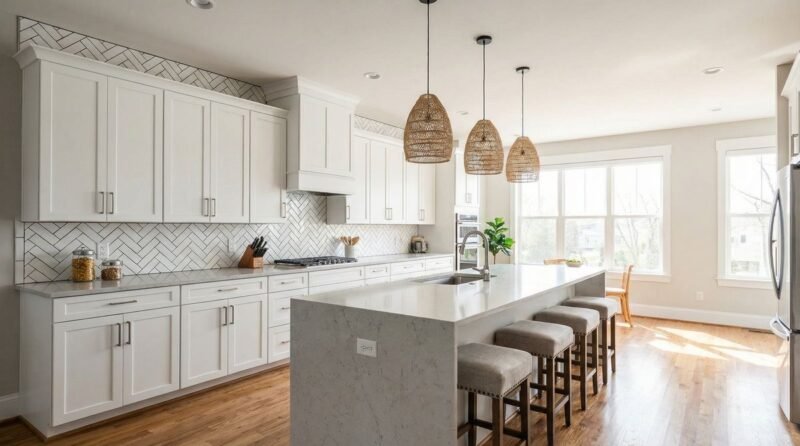
The combination of white cabinetry and quartz surfaces has established itself as a cornerstone of modern kitchen design. This pairing offers a pristine, luminous foundation that feels both expansive and inviting. However, the true character of the space is often defined by the vertical surface connecting these elements. Selecting the ideal backsplash is a critical design decision that bridges the gap between functional necessity and aesthetic expression. This comprehensive guide explores diverse backsplash options, practical considerations, and expert insights to help homeowners navigate this crucial choice and create a cohesive, personalized culinary environment.
The Enduring Appeal of White Cabinets and Quartz Countertops
White cabinets and quartz countertops offer a versatile and elegant foundation for any kitchen, providing a bright, clean aesthetic that complements a wide range of design styles and backsplash choices.
The enduring popularity of this combination lies in its inherent versatility. White cabinetry acts as a blank canvas, reflecting light and creating an illusion of spaciousness, which is particularly beneficial in smaller or less naturally lit kitchens. Quartz countertops complement this by offering a durable, non-porous surface that resists stains and scratches, making it highly practical for daily culinary activities. Together, they form a neutral backdrop that allows homeowners to introduce personality and texture through their choice of backsplash, whether they prefer a minimalist, traditional, or eclectic aesthetic.
Decoding Your Style: Backsplash Materials and Their Impact
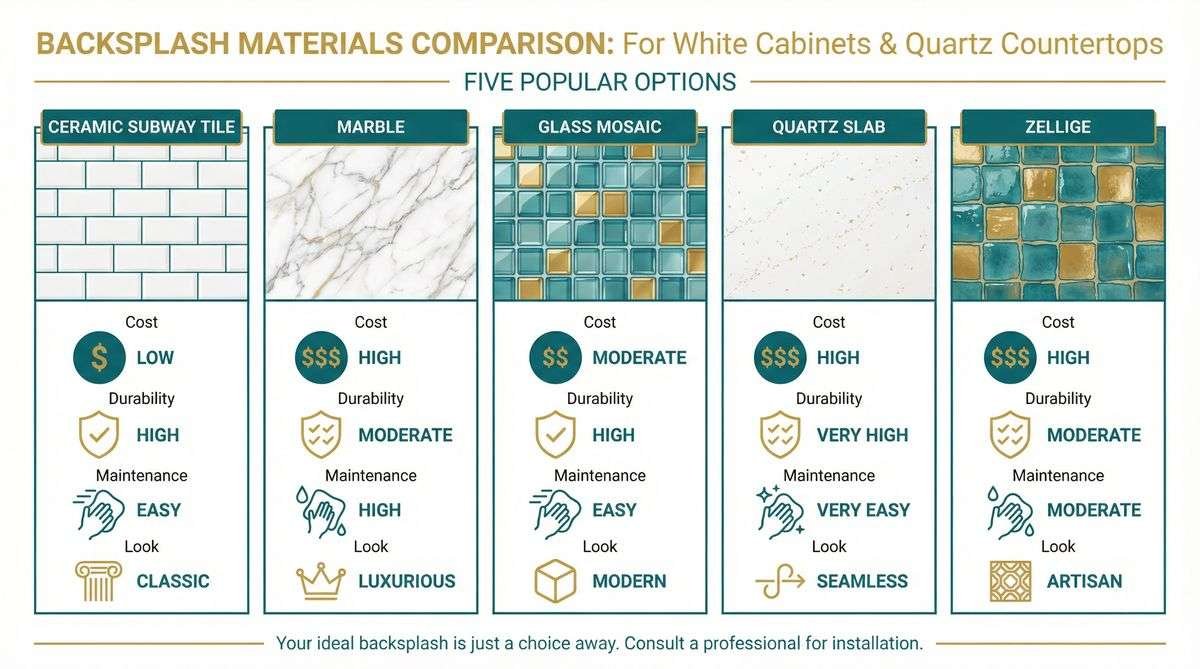
Selecting the right backsplash material is crucial for defining kitchen aesthetics, with options ranging from classic ceramic and luxurious marble to modern glass and cohesive quartz, each offering unique textures, durability, and visual effects.
Classic Ceramic and Porcelain Tiles
Ceramic and porcelain tiles remain a staple in kitchen design due to their affordability, durability, and immense variety. The classic subway tile, typically in a three-by-six-inch format, offers a timeless look that pairs seamlessly with white cabinets. For those seeking more visual interest, patterned ceramic tiles, such as geometric or Moroccan-inspired designs, can introduce vibrant colors and intricate motifs. While these tiles are generally easy to clean, the grout lines require regular maintenance to prevent discoloration.
Luxurious Natural Stone
Natural stone, including marble and travertine, introduces an element of luxury and organic beauty. The unique veining and subtle color variations inherent in natural stone create a sophisticated focal point. A honed finish offers a softer, matte appearance, while a polished finish provides a reflective, high-end look. However, natural stone is porous and requires periodic sealing to protect against stains and moisture, making it a higher-maintenance option compared to ceramic or glass.
Modern Glass Tiles
Glass tiles are favored for their reflective qualities, which can enhance the brightness of a kitchen and create a sense of depth. Available in a wide array of colors, finishes, and formats, glass tiles offer a sleek, contemporary aesthetic. They are non-porous and exceptionally easy to clean, making them a practical choice for areas prone to splashes. Care must be taken during installation, as glass can be susceptible to chipping if not handled correctly.
Seamless Quartz Backsplashes
For a truly cohesive and modern look, extending the quartz countertop material up the wall as a full-height backsplash is an increasingly popular choice. This approach eliminates grout lines entirely, resulting in a seamless, uninterrupted surface that is incredibly easy to maintain. Quartz is highly durable and resistant to stains and bacteria. While this option can be more costly upfront, the long-term benefits of low maintenance and a striking, monolithic appearance often justify the investment.
Harmonizing Hues: Color and Pattern Considerations
Achieving a cohesive kitchen design involves carefully balancing backsplash colors and patterns with existing white cabinets and quartz countertops, considering factors like contrast, visual flow, and the overall desired ambiance.
White on White: A Timeless Choice
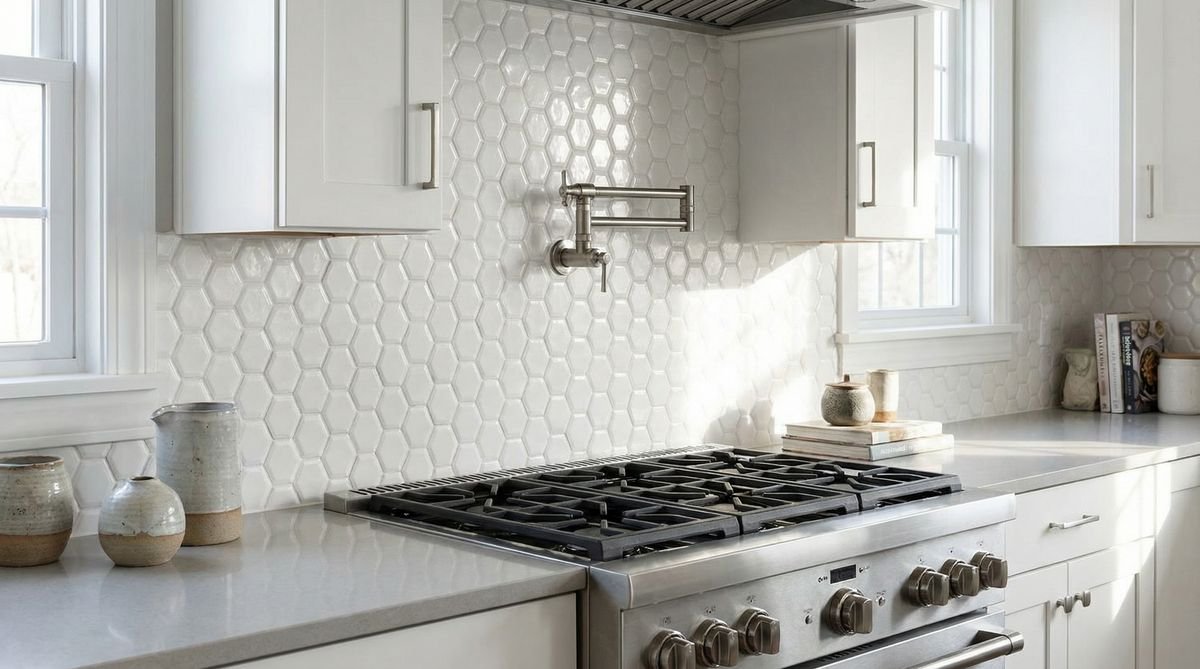
A white-on-white color scheme is a classic approach that emphasizes cleanliness and light. To prevent the space from feeling sterile, texture becomes paramount. Utilizing textured white tiles, such as handmade Zellige or beveled subway tiles, adds subtle visual interest without disrupting the monochromatic palette. The specific shade of the white quartz countertop should also guide the backsplash choice; pairing a cool white quartz with a warm white tile can create an unintended clash.
Adding Contrast and Pop
Introducing a contrasting color or bold pattern can transform the backsplash into a striking focal point. Deep blues, emerald greens, or even charcoal grays can provide a dramatic counterpoint to the white cabinetry. Geometric patterns or intricate mosaics can inject personality and energy into the space. When opting for a bold backsplash, it is often advisable to keep other design elements relatively subdued to maintain visual balance.
Neutral Tones and Subtle Patterns
For a softer, more transitional look, neutral tones such as soft grays, warm beiges, or muted taupes offer a sophisticated alternative to stark white. These colors harmonize beautifully with the subtle veining often found in quartz countertops. Employing subtle patterns, like a herringbone or chevron layout using neutral tiles, adds a layer of elegance and movement without overwhelming the senses.
Beyond Aesthetics: Practical Considerations for Your Backsplash
Beyond visual appeal, practical aspects such as durability, maintenance, grout selection, and budget are critical in choosing a backsplash that not only looks good but also functions effectively in a busy kitchen environment.
Durability and Maintenance
The primary function of a backsplash is to protect the wall from moisture, grease, and food splatters. Therefore, durability and ease of maintenance are paramount. Non-porous materials like glass, porcelain, and quartz offer superior resistance to stains and are generally easier to wipe clean. Natural stone and unglazed brick require more diligent care, including regular sealing, to maintain their appearance and integrity over time.
Grout: The Unsung Hero
Grout plays a significant role in both the aesthetic and functional aspects of a tiled backsplash. The color of the grout can dramatically alter the overall look; matching the grout to the tile creates a seamless appearance, while a contrasting grout color highlights the pattern and shape of the tiles. Functionally, selecting a high-quality grout, such as an epoxy-based option, can significantly improve stain resistance and reduce the need for frequent scrubbing.
Budgeting for Your Backsplash
Backsplash costs can vary widely depending on the chosen material and the complexity of the installation. Ceramic and porcelain tiles are generally the most budget-friendly options, while natural stone slabs and full-height quartz backsplashes represent a more significant investment. It is essential to factor in not only the cost of the materials but also the expense of professional installation, particularly for intricate patterns or heavy materials.
Expert Tips for a Flawless Backsplash Installation
Ensuring a flawless backsplash installation involves meticulous planning, proper surface preparation, and considering professional assistance for complex designs or materials to achieve a durable and aesthetically pleasing result.
Proper surface preparation is the foundation of a successful backsplash installation. The wall must be clean, dry, and structurally sound before any adhesive is applied. Accurate measuring and layout planning are crucial to ensure that tiles are cut correctly and patterns align perfectly, especially around outlets and windows. While some homeowners may choose to tackle a simple subway tile installation as a DIY project, complex patterns, natural stone slabs, or glass tiles often require the expertise and specialized tools of a professional installer to guarantee a flawless finish.
Frequently Asked Questions (FAQ)
Addressing common homeowner queries, this FAQ section provides concise answers on backsplash longevity, style trends, and compatibility with white cabinets and quartz countertops, guiding informed decision-making.
What is the best type of backsplash for a kitchen with white cabinets and quartz countertops?
The ideal backsplash depends on personal style and practical needs. Ceramic subway tiles offer a classic, budget-friendly look, while a full-height quartz backsplash provides a seamless, modern aesthetic with minimal maintenance. Glass tiles add a contemporary, reflective quality.
What backsplash does not go out of style?
Classic white subway tiles and solid natural stone slabs, such as marble, are widely considered timeless choices. These options provide a neutral, elegant backdrop that can adapt to evolving design trends and personal preferences over time.
Can you put a quartz backsplash with quartz countertops?
Yes, extending the quartz countertop material up the wall as a backsplash is a highly recommended design choice. It creates a cohesive, uninterrupted visual flow and offers exceptional durability and ease of cleaning due to the lack of grout lines.
Should backsplash match countertops or cabinets?
A backsplash does not need to perfectly match either the countertops or the cabinets. It can serve as a complementary element that ties the two together, or it can act as a contrasting focal point. The key is to ensure that the colors, textures, and patterns harmonize to create a balanced overall design.
Conclusion
Selecting the perfect backsplash for a kitchen featuring white cabinets and quartz countertops is an opportunity to infuse the space with personal style while enhancing its functionality. By carefully considering the diverse range of materials, colors, and patterns available, and weighing practical factors such as maintenance and budget, homeowners can make an informed decision. Whether opting for the timeless elegance of subway tile, the luxurious appeal of natural stone, or the seamless modernity of a quartz slab, a well-chosen backsplash will elevate the kitchen’s aesthetic and serve as a durable, beautiful backdrop for years to come.