


Are you worried a tornado might happen today? It’s a serious question that deserves a clear, direct answer. While no one can predict the exact time and place a tornado will form with 100% certainty, you can accurately assess your risk for today by using official tools and knowing the critical warning signs. This guide provides a simple, three-step process to help you determine your tornado risk and take the necessary precautions to stay safe.
Your 3-Step Guide to Checking Today’s Tornado Risk
Instead of worrying, take control. By checking a few official sources, you can get a reliable and up-to-date understanding of the tornado threat in your area. This is the same process that meteorologists and storm chasers use, and it only takes a few minutes.
Step 1: Check the Official SPC Outlook
Your first and most important stop is the Storm Prediction Center (SPC), a branch of the National Weather Service (NWS). The SPC is the official source for forecasting severe weather, including tornadoes, across the United States. Their “Day 1 Convective Outlook” map is the single most important tool for understanding your tornado risk on any given day.
This map shows areas of the country where severe thunderstorms are likely to occur, and it includes specific probabilities for tornadoes. The outlook is updated several times a day to reflect the latest weather data. You can find it by searching for “SPC Day 1 Convective Outlook” or visiting the SPC website directly.
To understand the map, you need to know the five risk categories:
| Risk Category | Color on Map | What It Means |
|---|---|---|
| Marginal | Dark Green | Isolated severe thunderstorms are possible. The threat is low, but you should stay weather-aware. |
| Slight | Yellow | Scattered severe thunderstorms are possible. A few tornadoes may be possible. |
| Enhanced | Orange | Numerous severe thunderstorms are possible. This is a significant threat, and a few tornadoes are likely. |
| Moderate | Red | Widespread severe thunderstorms are likely. Strong tornadoes are possible. This is a very serious threat. |
| High | Magenta | A major severe weather outbreak is expected, with widespread, long-lived, and intense tornadoes. This is a rare and life-threatening situation. |
Step 2: Understand Local NWS Alerts
If the SPC outlook indicates a risk for your area, the next step is to pay close attention to your local NWS office. They will issue specific alerts for your county as the weather develops. It is critical to understand the difference between a watch and a warning.
| Alert Type | Meaning | Action to Take |
|---|---|---|
| Tornado Watch | Be Prepared: Conditions are favorable for tornadoes to develop in and near the watch area. | Review your safety plan, check your shelter supplies, and stay tuned to weather updates. |
| Tornado Warning | Take Action: A tornado has been sighted by storm spotters or indicated by weather radar. The danger is imminent. | Take shelter immediately in a basement, safe room, or an interior room on the lowest floor. |
| Tornado Emergency | Seek Shelter Immediately: A large, destructive tornado is on the ground and has been confirmed. This is the highest level of alert. | Your life is in grave danger. Get to your shelter immediately. |
These alerts are often sent directly to your smartphone via the Wireless Emergency Alerts (WEA) system. Do not ignore them.
Step 3: Use a Real-Time Weather Radar App
For the most immediate, up-to-the-minute information, a reliable weather radar app is essential. These apps allow you to see the storms as they move and can show rotation within a storm — a key indicator that a tornado may be forming. Many apps also provide instant alerts for your specific location.
Look for apps that provide high-resolution radar and clear warning overlays. Some of the most trusted and widely used apps include The Weather Channel App, MyRadar, and RadarScope (for more advanced users).
10 Warning Signs a Tornado Could Be Forming
Beyond official forecasts, Mother Nature provides its own clues. Knowing these signs can give you critical extra minutes to get to safety. These signals can be seen in the sky, heard in the air, or felt in the atmosphere.
Visual Signs in the Sky
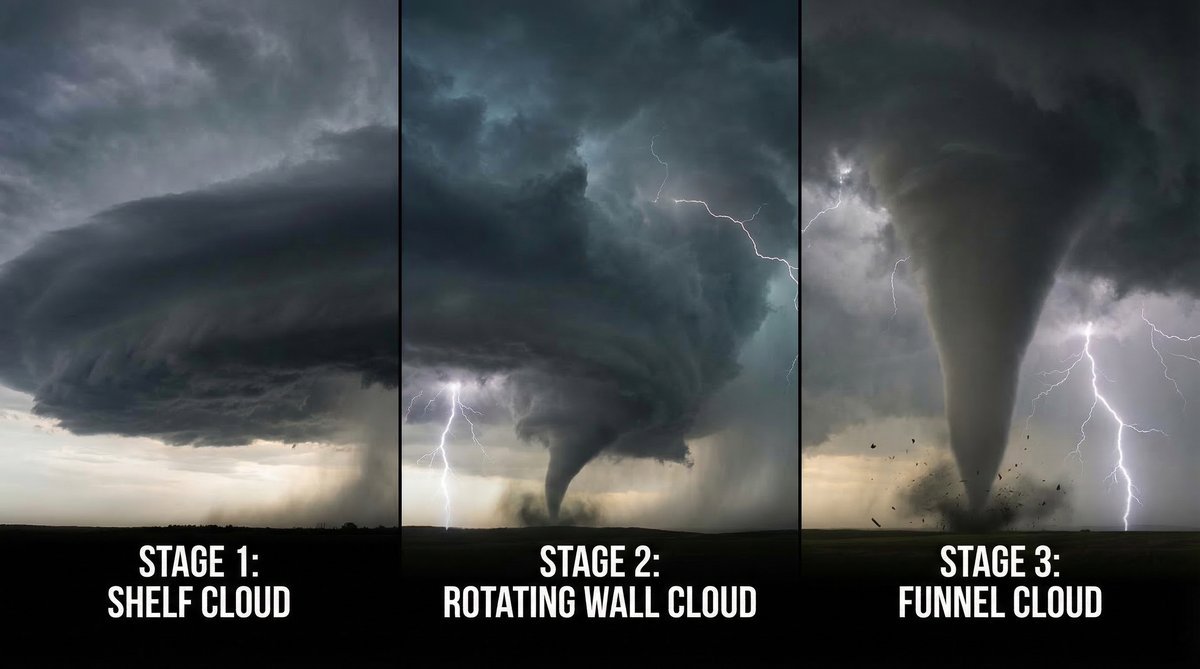
- A Rotating, Lowering Wall Cloud: A wall cloud is an isolated, lowering cloud base that is often seen rotating. It is the most significant visual sign that a tornado may be about to form.
- A Persistent, Rotating Funnel Cloud: This is the classic tornado shape. If you see a funnel-shaped cloud extending from the storm base and it is rotating, it may be a tornado. If it touches the ground, it is a tornado.
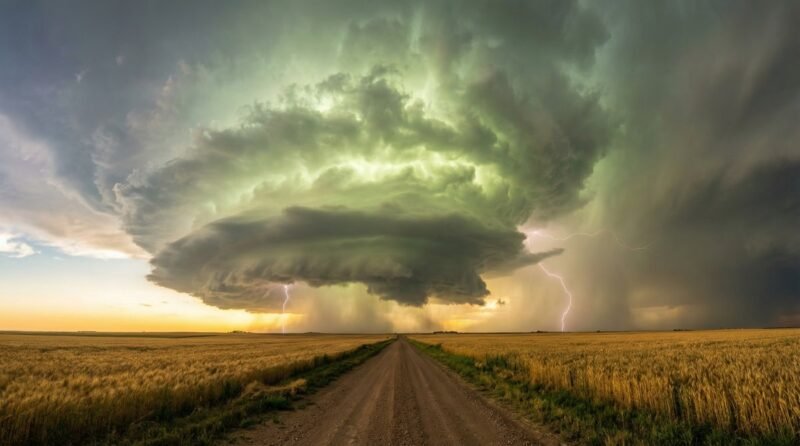
- A Dark Sky with a Greenish or Yellowish Hue: The sky often takes on an eerie, sickly color before a tornado. This is caused by the way light is scattered by the immense amount of water and hail in a massive supercell thunderstorm.
- An Approaching Cloud of Debris: A tornado can be obscured by rain or darkness. An approaching cloud of dust and debris, especially near the ground, can indicate the presence of a tornado even if you can’t see the funnel.
- Unusual and Rapid Cloud Movement: If you notice clouds moving very quickly, especially if they are rotating or converging, it is a sign of severe weather and potential tornado formation.
Auditory Clues
- A Loud, Continuous Roar: Many tornado survivors describe the sound as a continuous, deafening roar similar to a freight train or a jet engine. Unlike thunder, this sound does not fade.
- A Sudden, Eerie Calm: After a period of heavy rain, wind, and hail, a sudden and unsettling calm can occur. This “calm before the storm” can be a sign that the storm is reorganizing and a tornado may be imminent.
Atmospheric & Other Signs
- Large Hail in the Absence of Rain: Very large hail (the size of a quarter or larger) is a product of powerful thunderstorm updrafts, the same forces that create tornadoes. If large hail is falling without any rain, it can be a strong danger sign.
- Sudden, Significant Drop in Temperature: A rapid drop in temperature can signal a downdraft from a powerful storm, which can be associated with tornado formation.
- Erratic Behavior in Animals: While not a scientific indicator, many people have reported that their pets or local wildlife behave strangely, become agitated, or seek shelter just before a tornado strikes.
When and Where Are Tornadoes Most Likely?
While a tornado can technically occur at any time of year in any state, there are distinct patterns in their timing and location. Understanding this context helps you know when to be most vigilant. The United States experiences more tornadoes than any other country, with most occurring during a specific “tornado season.”
This season’s peak shifts across the country as the year progresses. Generally, the national peak is from March through June. However, different regions have their own unique periods of heightened activity. For instance, the infamous Tornado Alley of the Central and Southern Plains sees its most violent storms in the spring, while the Dixie Alley in the Southeast has a secondary peak in the late fall and early winter.
| Region | Peak Tornado Months |
|---|---|
| Southern Plains (Tornado Alley) | April–June |
| Dixie Alley (Southeast) | March–May, November |
| Great Plains | May–June |
| Midwest | May–July |
| Northeast | June–August |
| Florida | June–September |
Your Tornado Safety Action Plan for Today

Knowing your risk is the first step; having a plan is the second. Your actions should differ based on whether a watch or a warning has been issued.
If a Tornado WATCH is Issued
A watch means conditions are favorable for tornadoes. It’s time to prepare, not panic. Discuss your family’s emergency plan and make sure everyone knows where to go for shelter. Ensure your emergency kit is stocked with water, a first-aid kit, a flashlight with extra batteries, and a weather radio. Bring loose outdoor items like furniture, toys, and trash cans inside, as these can become dangerous projectiles in high winds. Keep a close eye on the weather through your local news or a weather app and be ready to act quickly.
If a Tornado WARNING is Issued
A warning means a tornado is happening or is imminent. You must take shelter immediately. Get to the lowest level of a sturdy building, away from windows. The best options are a certified storm shelter or a basement. If there is no basement, go to an interior room on the lowest floor, such as a bathroom or closet. Put as many walls as possible between you and the outside, get under something sturdy like a heavy table, and cover your head and neck with your arms.
If you are in a car or outdoors, do not try to outrun a tornado. Abandon your vehicle and get to a sturdy building. If that’s not possible, lie flat in a nearby ditch or ravine, covering your head with your hands. Mobile homes offer no protection from tornadoes — leave immediately and go to a community shelter or a sturdy nearby building.
Frequently Asked Questions (FAQ)
How accurate are tornado warnings?
Tornado warnings have become much more accurate over the years, but they are not perfect. The average lead time for a tornado warning is about 13 minutes, according to the National Weather Service. However, it’s important to know that more than half of all tornado warnings are false alarms. This is because forecasters will issue a warning if radar shows strong rotation in a storm, even if a tornado never actually touches down. The goal is to err on the side of caution to save lives.
What time of day do most tornadoes happen?
Tornadoes can happen at any time, but they are most common in the late afternoon and early evening, typically between 4 p.m. and 9 p.m. This is when the sun has heated the ground, creating the warm, unstable air that fuels severe thunderstorms.
Can you outrun a tornado in a car?
Trying to outrun a tornado in a vehicle is extremely dangerous and not recommended. Tornadoes can move at speeds over 60 mph, and their paths can be erratic and unpredictable. You can easily be caught in the storm’s path or get trapped in traffic. The safest action is to abandon your vehicle and seek shelter in a sturdy building or a low-lying area like a ditch.
What’s the difference between a funnel cloud and a tornado?
The only difference is ground contact. A funnel cloud is a rotating column of air that extends from the base of a thunderstorm, but it is not a tornado until that column touches the ground. Once it makes contact with the earth, it is officially classified as a tornado.
What state has the most tornadoes?
Texas reports the highest number of tornadoes each year, with an average of over 140. However, states like Kansas and Oklahoma have more tornadoes per square mile, making them the heart of what is known as Tornado Alley.
Do I need a weather radio?
Yes, a NOAA Weather Radio is a highly recommended and reliable tool. It can provide you with direct alerts from the National Weather Service, even if the power goes out or cell service is down. It is one of the most effective ways to ensure you receive a warning in time to get to safety.