




Verdict: Kindle Unlimited is worth it — but only for the right reader. At $11.99 per month, the math works cleanly if you finish two or more books a month and read in genres where the catalog is strongest: romance, fantasy, and self-published non-fiction. Read less than that, or rely heavily on big-name traditional publishers, and the value evaporates fast.
One misconception to clear up immediately: Kindle Unlimited is not included with Amazon Prime. It is a separate ebook subscription service with its own monthly charge. Prime Reading — the smaller, free-with-Prime perk — covers roughly 3,000 titles. Kindle Unlimited unlocks closer to 4 million, almost all of them from authors enrolled in KDP Select, Amazon’s indie publishing program.
Three questions actually determine whether $11.99 a month is money well spent: Does the catalog match what you read? Does the math pencil out against buying books individually — or borrowing them free? And how does Kindle Unlimited stack up against alternatives like Libby, Prime Reading, or Audible? Each of those gets a direct answer below, including a breakeven calculator and a niche-by-niche verdict.
What Is Kindle Unlimited and How Does It Work?
Kindle Unlimited is Amazon’s ebook subscription service that lets you borrow and read from a catalog of over 4 million titles for a flat monthly fee. You can hold up to 20 borrowed titles at once — return one to free up a slot, borrow another. There are no due dates, no late fees, and no per-book charges on top of your subscription.
The catalog skews heavily toward independently published titles. Amazon populates Kindle Unlimited through its KDP Select program — a scheme where authors and publishers voluntarily enroll their books in exchange for a share of monthly royalty payouts. According to The New Publishing Standard (2026), self-published works make up roughly 60% of the catalog. Major traditional publishers like Penguin Random House largely opt out, which is the single most important thing to understand before subscribing.
Kindle Unlimited Cost, Free Trial, and Billing Options
Kindle Unlimited costs $11.99 per month in the United States. There is no annual plan — billing is strictly month-to-month, charged to your Amazon account on a recurring cycle. Amazon periodically offers a 30-day free trial to new subscribers, and promotional deals (sometimes as generous as three months free) appear several times a year, particularly around Prime Day and the holiday season.
At $11.99/month, the subscription is not expensive in absolute terms — but it’s not free, either. Whether that price is justified depends entirely on how many books you actually read, which the breakeven section below addresses with hard numbers.
| Billing Detail | Current Status |
|---|---|
| Monthly price (US) | $11.99/month |
| Annual/yearly plan | Not available |
| Free trial (standard) | 30 days for new subscribers |
| Promotional free trial | Up to 3 months (limited-time offers) |
| Borrow limit | 20 titles at one time |
What Devices Can You Use Kindle Unlimited On?
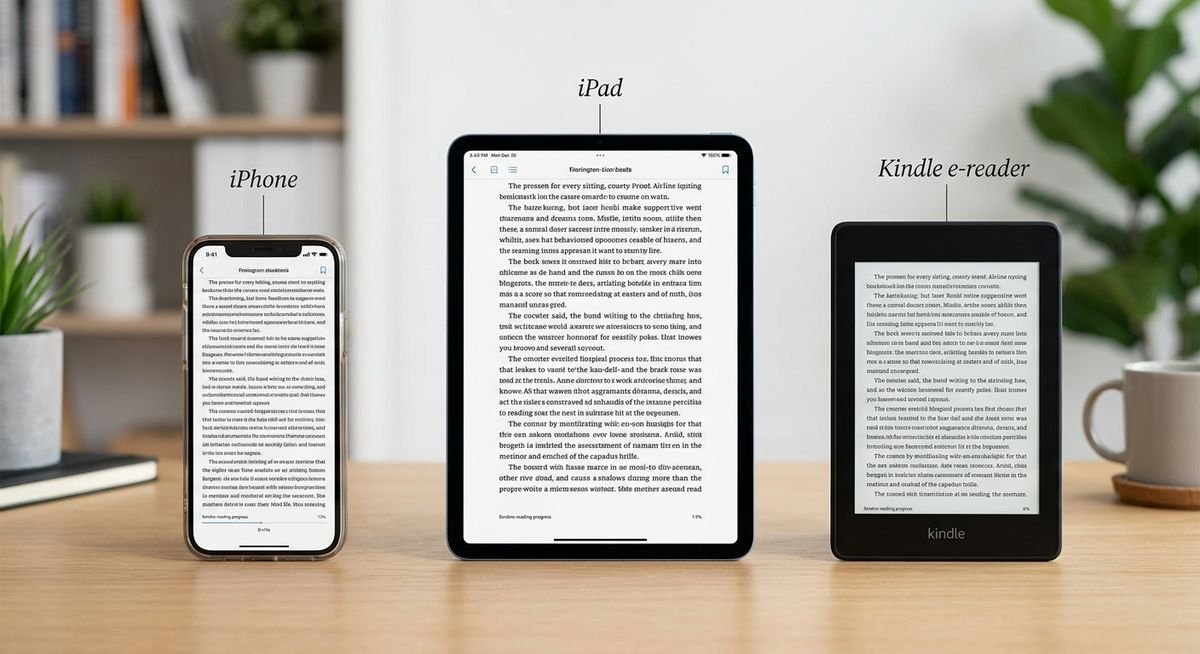
Kindle Unlimited works on any device running the free Kindle app — iPhone, iPad, Android phones and tablets, Fire tablets, Kindle e-readers, and even a standard web browser via Amazon’s Cloud Reader. One subscription covers all your devices simultaneously. The only notable exception is Kobo: Kindle Unlimited is not available on Kobo e-readers, which run a separate ecosystem entirely.
Is Kindle Unlimited Part of Prime — or Separate?
Kindle Unlimited is a completely separate paid subscription — it is not included with Amazon Prime, and Prime membership does not unlock it at any level. This is the most common misconception about the service. Prime members do get access to Prime Reading, but that’s a fundamentally different offering.
Prime Reading includes roughly 3,000 curated titles available at no extra cost within a Prime membership. Kindle Unlimited, by contrast, opens access to over 4 million titles for an additional $11.99 per month on top of whatever you already pay for Prime. The two services share the same Kindle app interface, which fuels the confusion — but they are billed, managed, and cataloged separately.
| Feature | Prime Reading | Kindle Unlimited |
|---|---|---|
| Included with Prime? | Yes | No — separate charge |
| Catalog size | ~3,000 titles | 4 million+ titles |
| Extra monthly cost | $0 | $11.99/month |
| Borrow limit | 10 titles | 20 titles |
If your reading habits are light — a book or two per month across popular genres — Prime Reading may cover enough ground without the extra spend. Heavy readers, romance fans, and anyone working through a fantasy series will hit Prime Reading’s catalog ceiling quickly.
The Breakeven Calculator — Does Kindle Unlimited Save You Money?
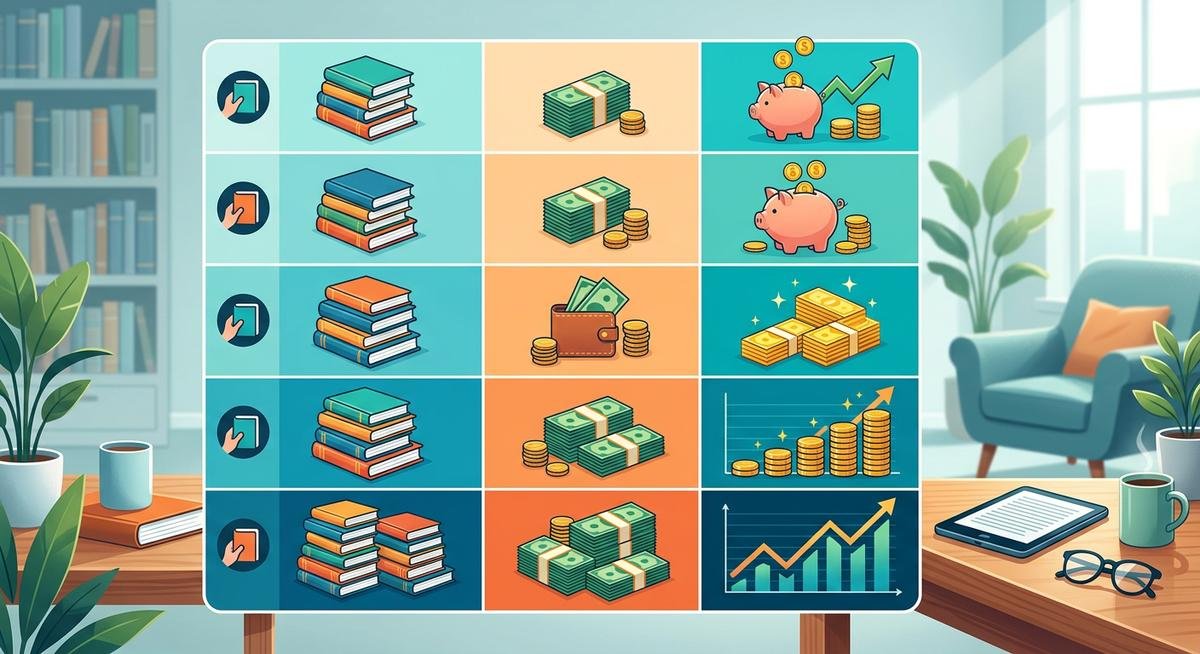
At $11.99 per month, Kindle Unlimited pays for itself the moment you read one ebook that would otherwise cost $12 or more — which describes the majority of traditionally priced Kindle titles. Read two books a month and you’re saving money. Read three or more and the subscription is an obvious financial win compared to buying individually.
How Many Books Do You Need to Read to Break Even?
The math is genuinely simple, and no competitor seems to have bothered laying it out plainly. Here it is.
| Books Read/Month | Avg. Individual Cost | Total If Purchased | KU Monthly Cost | Monthly Savings | Verdict |
|---|---|---|---|---|---|
| 1 | $12.99 | $12.99 | $11.99 | ~$1 | Breakeven |
| 2 | $12.99 | $25.98 | $11.99 | ~$14 | Modest savings |
| 3 | $12.99 | $38.97 | $11.99 | ~$27 | Clear financial win |
| 4+ | $12.99 | $51.96+ | $11.99 | $40+ | Strong value |
The $12.99 average used above reflects a typical mid-range Kindle ebook price for indie and small-press titles — the exact category that dominates the Kindle Unlimited catalog. Bestselling traditionally published ebooks often run $14.99 to $16.99, which makes the breakeven point even easier to hit.
One honest caveat: the public library is free. If you use Libby regularly and your library system has solid digital inventory, the cost-benefit calculation shifts significantly — KU charges $11.99 per month for something that costs $0 elsewhere. The difference is instant access with no waitlists, plus roughly four million titles enrolled through KDP Select that library systems simply don’t carry. Whether that convenience premium is worth it depends entirely on your reading volume and tolerance for holds queues.
KU enforces a borrow limit of 20 title slots at any one time. Return a finished book, borrow another immediately. For most readers, 20 slots is plenty. Heavy readers who finish a book every day or two cycle through those slots quickly, but the system accommodates fast reading habits without friction.
Is Kindle Unlimited Good for Audiobooks — or Should You Use Audible?
Kindle Unlimited and Audible are two entirely separate Amazon services, and conflating them is one of the most common misconceptions about the ebook subscription service. KU does include a limited selection of audiobooks — accessible via the Whispersync channel for certain enrolled titles — but the audio catalog is a fraction of what Audible offers.
Audible operates on a credit-based model: subscribers purchase credits monthly and spend them on audiobook titles, which they own permanently. KU is an unlimited borrowing service for ebooks, with audio as a supplementary feature rather than a core offering. The two services overlap only at the edges.
Holding both subscriptions simultaneously makes sense for a specific type of reader: someone who consumes ebooks at volume through KU and also listens to audiobooks during commutes or workouts via Audible. For anyone whose audio needs are modest, the audiobooks available within KU — while inconsistent — may be sufficient without paying for Audible separately. For dedicated audiobook listeners, Audible’s catalog depth makes it the stronger standalone choice; KU’s audio selection alone does not justify the $11.99 monthly fee.
Is Kindle Unlimited Worth It for Your Reading Niche?
The single most important factor in whether Kindle Unlimited delivers value isn’t how many books you read — it’s what you read. The catalog’s strengths are concentrated and real; its gaps are equally real. Here’s a direct verdict for each major reader type.
Romance and Fantasy Readers
Verdict: Yes — this is the strongest use case by a wide margin. Kindle Unlimited’s catalog is overwhelmingly built around indie romance and fantasy, with hundreds of thousands of titles enrolled through KDP Select. Genres like paranormal romance, dark fantasy, romantasy, and reverse harem have entire ecosystems of prolific authors publishing exclusively through KU.
Readers in these genres routinely consume four to eight books per month. At that pace, the $11.99/month subscription pays for itself several times over compared to buying titles individually at $3.99–$5.99 each. If romance or fantasy is your primary genre, Kindle Unlimited is genuinely good value — arguably the best ebook subscription service available for these categories.
Manga and Comics Readers
Verdict: Depends — useful supplement, not a complete solution. Kindle Unlimited does carry a growing manga selection, including titles from Viz Media and a range of indie comics, but the catalog is inconsistent. Major publishers like Kodansha and Shonen Jump have limited representation, and popular series often have only select volumes available rather than complete runs.
For casual manga readers or those exploring new series, KU can stretch a budget meaningfully. Dedicated manga readers who want full series access will likely need to supplement with purchases or a dedicated service like Manga Plus.
Parents and Kids’ Books
Verdict: Yes — especially for early readers and chapter book stages. Kindle Unlimited includes a solid range of children’s ebooks, picture books, and early readers. Parents of voracious young readers — the kind who finish three chapter books in a week — will find the unlimited borrow model particularly cost-effective, since children’s titles typically retail between $4.99 and $9.99 each.
The borrow limit of 20 titles at a time is rarely a constraint for kids’ reading patterns. The catalog depth at the early reader and middle-grade level is genuinely strong.
Non-Fiction Readers
Verdict: Depends — heavily contingent on your tolerance for indie authors. Major traditional publishers — Penguin Random House, HarperCollins, Simon & Schuster — do not enroll titles in KDP Select, which means their non-fiction catalogs are almost entirely absent from Kindle Unlimited. The non-fiction available skews toward self-published business, self-help, and personal development titles.
Readers who are open to indie non-fiction authors can find genuine value here. Readers who primarily want titles from established publishers will hit the catalog ceiling fast.
Does Kindle Unlimited Have Every Book?
No — and this is the most common misconception about the service. Kindle Unlimited does not include every book sold on Amazon. The catalog is limited to titles whose authors have enrolled in KDP Select, which requires 90-day exclusivity and is used predominantly by indie and self-published authors. A handful of traditional publishers participate selectively, but bestseller lists from major houses are largely off-limits.
| Reader Type | KU Catalog Strength | Verdict |
|---|---|---|
| Romance / Fantasy | Exceptional — hundreds of thousands of titles | ✅ Yes |
| Manga / Comics | Growing but inconsistent; gaps in major series | ⚠️ Depends |
| Kids / Early Readers | Strong at picture book and chapter book level | ✅ Yes |
| Non-Fiction | Indie-heavy; major publishers absent | ⚠️ Depends |
| Traditional / Literary Fiction | Weak — Big Five titles rarely enrolled | ❌ No |
The practical ceiling matters: KU allows up to 20 borrowed titles at one time. For most readers, that’s not a constraint. For households with multiple readers sharing one account, it can become one quickly — since borrows are tied to a single Amazon account and are not shareable across profiles.
Kindle Unlimited vs. Prime Reading vs. Audible vs. Libby
Kindle Unlimited, Prime Reading, Audible, and Libby are four distinct services that readers routinely conflate — and confusing them leads to paying for something you don’t need or skipping something that would genuinely serve you. Here’s how they actually stack up against each other.
Kindle Unlimited vs. Prime Reading
Kindle Unlimited and Prime Reading are not the same service. Prime Reading is a perk bundled inside an Amazon Prime membership — no extra charge — but it covers only around 3,000 curated titles at any given time. Kindle Unlimited is a separate $11.99/month subscription that unlocks a catalog of roughly 4 million titles, the vast majority of which are indie and self-published works enrolled through KDP Select.
Prime Reading rotates its selection and skews toward popular mainstream titles, making it genuinely useful for light readers who finish one or two books a month. Upgrade to Kindle Unlimited only if Prime Reading’s limited shelf consistently leaves you wanting more — or if you read heavily in romance, fantasy, or other genres where indie authors dominate.
| Feature | Prime Reading | Kindle Unlimited |
|---|---|---|
| Cost | Included with Prime | $11.99/month extra |
| Catalog size | ~3,000 titles | ~4 million titles |
| Simultaneous borrows | Up to 10 | Up to 20 |
| Catalog type | Curated mix, rotates | Mostly indie/KDP Select |
Kindle Unlimited vs. Audible
Kindle Unlimited and Audible are entirely separate Amazon services — one is an ebook subscription, the other is a credit-based audiobook platform. Audible membership starts at $14.95/month and grants one credit per month redeemable for any audiobook in a catalog exceeding 500,000 titles. Kindle Unlimited includes some audio add-ons via Whispersync for a small subset of titles, but that selection is a fraction of what Audible offers.
Subscribing to both simultaneously makes sense for readers who consume ebooks and audiobooks at high volume — you get unlimited reading plus one owned audiobook credit each month. For pure audiobook listeners, Audible alone is the stronger choice. For readers who occasionally want audio, KU’s limited Whispersync titles may be enough without paying for both.
Kindle Unlimited vs. Libby (Public Library)
Libby — the OverDrive-powered public library app — is free with a valid library card, and no competitor comparison meaningfully addresses whether Kindle Unlimited is worth it if you already use it. The honest answer: if your local library system has strong digital holdings and you can tolerate waitlists, Libby will cover most bestseller and traditional-publisher needs at zero cost.
Where Kindle Unlimited wins is instant access and indie depth. Libby’s digital inventory is constrained by library licensing budgets, and popular titles routinely carry waitlists of weeks or months. Kindle Unlimited has no borrow limit queue — you can grab any of its 4 million titles immediately, with up to 20 title slots open at once. The trade-off is that KU’s catalog skews heavily toward self-published authors, so if your reading diet runs to Big Five releases, Libby remains the smarter free alternative.
The clearest verdict: use Libby for traditionally published bestsellers and save the $11.99/month. Add Kindle Unlimited if you read faster than Libby’s waitlists allow, or if indie romance, fantasy, and genre fiction make up a significant share of what you actually finish.
Authors don’t just read Kindle Unlimited — they fund it. Every title in the KU catalog got there because an author enrolled in KDP Select, Amazon’s exclusivity program, and the financial mechanics behind that decision are more nuanced than most publishing advice acknowledges.
How Authors Get Paid Through Kindle Unlimited
When a KU subscriber borrows and reads an enrolled title, the author earns from the Kindle Direct Publishing Global Fund — a pool Amazon replenishes monthly. According to The New Publishing Standard, the KDP Global Fund paid out $711.3 million in 2025 alone, with total payouts exceeding $2.58 billion since 2020. Payment is not per borrow. It is per page read, measured in Kindle Edition Normalized Pages (KENP).
The per-page rate fluctuates monthly based on total pages read across the entire program, but has historically hovered around $0.004–$0.005 per KENP page. A 300-page novel fully read generates roughly $1.20–$1.50 — comparable to a 70% royalty on a $1.99 ebook sale, but only if readers finish the book.
| Book Length (KENP Pages) | Estimated Earnings (at $0.0045/page) | Equivalent Ebook Sale Price (70% royalty) |
|---|---|---|
| 200 pages | ~$0.90 | ~$1.29 |
| 300 pages | ~$1.35 | ~$1.93 |
| 400 pages | ~$1.80 | ~$2.57 |
The Exclusivity Trade-Off — Is KDP Select Worth It for Authors?
KDP Select enrollment runs in 90-day renewable terms, and the core condition is hard: the ebook version must be exclusive to Amazon. No Kobo. No Apple Books. No Google Play, Smashwords, or direct sales during that window.
For authors whose readers are overwhelmingly on Amazon — which describes most indie romance, fantasy, and thriller writers — the trade-off often pencils out. KDP Select also unlocks Kindle Countdown Deals and Free Book Promotions, both of which can spike visibility and page-read volume significantly. The ebook subscription service model rewards authors whose books generate sustained borrow-and-finish behavior, not just impulse downloads.
The calculus flips for authors with an established wide-distribution audience. Pulling titles from Kobo and Apple Books to chase KENP income means abandoning readers who won’t follow to Amazon — a real revenue cost that page-read earnings may not offset. Authors on Reddit’s r/selfpublishing frequently debate exactly this point, and the consensus is consistent: KDP Select is powerful for launching new titles into Amazon’s algorithm, but long-term wide distribution builds a more resilient business.
| Factor | KDP Select (KU Exclusive) | Wide Distribution |
|---|---|---|
| Platform reach | Amazon only | Amazon + Kobo, Apple, Google |
| Income source | KENP page reads + sales | Sales royalties only |
| Promo tools | Countdown Deals, Free Days | Platform-specific promos |
| Best for | New launches, prolific indie authors | Established multi-platform audiences |
The honest verdict for self-publishing: KDP Select is worth it as a launch strategy or for authors writing in high-KU-consumption genres. As a permanent home for a backlist, the exclusivity cost deserves harder scrutiny.
How Does Kindle Unlimited Compare to Scribd (Everand)?
Scribd — now rebranded as Everand — charges the same $11.99/month as Kindle Unlimited but operates on a fundamentally different model. Everand uses a credit-based system for premium titles: Standard plan members unlock one bestseller per month, while Plus members ($16.99/month) get three. Both tiers include unlimited access to magazines, podcasts, sheet music, and a smaller rotating catalog of ebooks and audiobooks.
Kindle Unlimited wins on raw ebook volume — 4 million titles versus Everand’s roughly 1.5 million — but Everand includes bestselling traditionally published books that KU simply cannot offer due to its KDP Select exclusivity model. Readers who prioritize Big Five publishers may find Everand’s curated selection more aligned with their taste, despite the credit constraints.
| Feature | Kindle Unlimited | Everand (Scribd) |
|---|---|---|
| Monthly price | $11.99 | $11.99 (Standard) / $16.99 (Plus) |
| Ebook catalog | 4 million+ (mostly indie) | 1.5 million+ (includes bestsellers) |
| Audiobooks | Limited Whispersync titles | Included in subscription |
| Borrow model | Unlimited, 20 at a time | Credit-based for premium titles |
| Best for | Indie romance, fantasy, genre fiction | Mixed readers wanting bestsellers + audio |
Kindle Unlimited Pricing Around the World
Kindle Unlimited costs vary significantly by region, and whether the subscription is worth buying depends partly on local ebook pricing norms. The service is available in over 10 countries, each with its own catalog and monthly rate.
| Country | Monthly Price | Annual Cost | Value Assessment |
|---|---|---|---|
| United States | $11.99 USD | $143.88 | Standard benchmark |
| United Kingdom | £9.49 GBP | £113.88 | Competitive vs UK ebook prices |
| Australia | A$13.99 AUD | A$167.88 | Higher cost; strong if reading 3+/month |
| Canada | C$11.99 CAD | C$143.88 | Matches US value proposition |
| India | ₹169 INR | ₹2,028 | Exceptionally strong value vs local ebook prices |
| Germany / EU | €9.99 EUR | €119.88 | Good value for English-language readers |
India stands out as the strongest value proposition globally — at ₹169/month (roughly $2 USD), the subscription cost is trivial relative to individual ebook prices. Australian subscribers pay a premium, making the breakeven threshold slightly higher at three books per month rather than two.
Kindle Unlimited is not available as a standalone service in Hong Kong. Readers in Hong Kong can access it through an international Amazon account (typically Amazon.com), but the catalog and pricing default to the US version at $11.99 USD per month.
Family Sharing, Cancellation, and Device Tips
Kindle Unlimited does not offer a family plan. Each Amazon account requires its own separate subscription, and borrowed titles cannot be shared across household profiles. For families with multiple heavy readers, this means paying $11.99 per person — a cost that adds up quickly and is worth factoring into the value calculation.
Cancellation is straightforward: navigate to your Amazon account settings, find the Kindle Unlimited subscription management page, and select cancel. Access continues through the end of your current billing cycle, and there are no cancellation fees. Borrowed books disappear from your library once the subscription lapses — you do not retain access to any previously borrowed titles.
One practical workaround for households: a single Kindle Unlimited subscription supports reading across all devices linked to that Amazon account simultaneously. Two family members sharing one account can read different borrowed books on different devices at the same time, as long as the total borrows stay within the 20-title limit.
- Supported devices: Kindle e-readers, Fire tablets, iPhone, iPad, Android phones and tablets, PC, Mac, web browser
- Not supported: Kobo e-readers (separate ecosystem; consider Kobo Plus instead at $7.99-$9.99/month)
- Borrow limit: 20 titles per account, not per device
- Cancellation: No fees, no penalties, effective at end of billing period
Frequently Asked Questions
Is Kindle Unlimited free with Amazon Prime?
No. Kindle Unlimited is a separate paid subscription at $11.99/month and is not included with Amazon Prime. Prime members get access to Prime Reading — a smaller, curated collection of roughly 3,000 titles — but that is a distinct perk, not Kindle Unlimited. To access the full KU catalog of approximately 4 million titles, you pay extra regardless of your Prime status.
How many books can you read with Kindle Unlimited?
You can hold up to 20 borrowed titles in your KU library at one time. There is no cap on how many books you read per month — return a title, borrow another. Voracious readers who finish 5–10 books monthly get the clearest financial benefit, but even 2–3 books/month puts you ahead of buying individually at typical ebook prices.
Is Kindle Unlimited the same as Audible?
They are two separate Amazon services. Kindle Unlimited is an ebook subscription with a limited selection of audio add-ons via Whispersync; Audible is a dedicated audiobook platform running on a credit-based purchase model with a catalog that dwarfs KU’s audio offerings. If audiobooks are your primary format, Audible is the better fit. KU’s audio selection is a bonus, not a selling point.
Is Kindle Unlimited worth it if you already use Libby?
It depends entirely on your reading diet. Libby (OverDrive) is free through your public library and covers most major traditionally published titles — but popular books often have waitlists measured in weeks or months. Kindle Unlimited offers instant access to millions of indie titles with zero waitlists. If your library reliably covers your reading list, KU is harder to justify. If you read heavily in indie romance, fantasy, or self-published non-fiction, KU fills a gap Libby simply doesn’t.
Can you use Kindle Unlimited without a Kindle device?
Yes. The free Kindle app runs on iPhone, iPad, Android phones and tablets, Mac, PC, and most web browsers. A physical Kindle e-reader is never required. The one notable exception: Kindle Unlimited is not available on Kobo devices, which run a competing ecosystem.
Does Kindle Unlimited include audiobooks?
A subset of KU titles include a free audiobook upgrade through Whispersync for Voice, but the selection is far smaller than Audible’s full library. KU is primarily an ebook subscription service. Treat any audio access as a secondary perk rather than a core feature.
At what point does Kindle Unlimited actually save money?
| Books Read/Month | Avg. Ebook Cost (Bought) | KU Cost | Monthly Savings |
|---|---|---|---|
| 1 | ~$12.00 | $11.99 | ~$0 (breakeven) |
| 2 | ~$24.00 | $11.99 | ~$12 |
| 3 | ~$36.00 | $11.99 | ~$24 |
| 5+ | ~$60.00+ | $11.99 | ~$48+ |
One $12 ebook per month gets you to breakeven. Two books delivers meaningful savings. Three or more per month and the math is unambiguous — KU wins by a wide margin over buying titles individually.
No family plan exists. Each Amazon account needs its own $11.99/month subscription. Borrowed titles are not transferable between accounts. Two family members can read simultaneously on the same account using different devices, but the 20-title borrow limit applies to the account as a whole.
Is Kindle Unlimited easy to cancel?
Yes. Cancel anytime through Amazon account settings with no fees or penalties. Access continues until the end of your billing cycle. Borrowed books disappear when the subscription lapses — you do not keep previously borrowed titles.
Can you use Kindle Unlimited on a Kobo e-reader?
No. Kindle Unlimited is locked to the Amazon ecosystem — Kindle devices and the free Kindle app on iOS, Android, and desktop. Kobo operates a separate platform with its own subscription service, Kobo Plus, starting at $7.99/month.
Does Kindle Unlimited offer a student discount?
No. Amazon does not currently offer a student discount for Kindle Unlimited. Unlike Amazon Prime (which has a discounted Prime Student tier), Kindle Unlimited charges $11.99/month for all subscribers regardless of student status. The 30-day free trial and occasional promotional offers are the closest substitutes.
Is Kindle Unlimited ending or being discontinued?
No. As of 2026, Kindle Unlimited remains an active, growing service with no announced plans for discontinuation. The KDP Global Fund topped $711 million in 2025, per The New Publishing Standard, and subscriber numbers reached 10 million worldwide by early 2026. Occasional service outages are normal and resolve through standard Amazon support channels.
What do Reddit users say about Kindle Unlimited?
Reddit communities like r/kindle and r/books consistently reach the same conclusion: Kindle Unlimited is worth it for romance, fantasy, and genre fiction readers who consume three or more books monthly. The most frequent criticism is the lack of traditionally published bestsellers. Users who already rely on Libby often report that adding KU feels redundant unless they read heavily in indie-dominated genres.
Conclusion
Kindle Unlimited is worth buying in 2026 — but only for the right reader. At $11.99/month in the US (or £9.49 in the UK, ₹169 in India), the math tips decisively in your favor once you read three or more books per month, particularly in romance, fantasy, sci-fi, children’s books, or manga.
| Reader Type | Verdict |
|---|---|
| Romance / fantasy / sci-fi reader, 3+ books/month | ✅ Clearly worth it |
| Parent of voracious young readers | ✅ Worth it |
| Heavy non-fiction reader (traditional publishers) | ❌ Weak catalog fit |
| Libby user whose library covers their needs | ❌ Hard to justify |
| Casual reader, 1 book/month | ⚠️ Depends on price per title |
If your public library already satisfies your reading habits through Libby, Kindle Unlimited adds less obvious value — instant access and no waitlists are real advantages, but not always worth $143.88 per year. Regional pricing changes that calculus significantly; India’s monthly rate makes it one of the strongest ebook subscription service deals anywhere.
For authors, enrolling in KDP Select feeds your titles directly into the KU catalog and unlocks page-read income from the annual KDP Global Fund — a legitimate revenue stream, though the 90-day exclusivity requirement deserves serious consideration before committing.
The lowest-risk move is the free trial. Thirty days is enough to know whether the catalog fits your taste and whether you’ll realistically hit the borrow limit that justifies the cost.