



Introduction: The Small Bathroom Dilemma
In the realm of home improvement, particularly when dealing with compact living spaces, every design choice holds significant weight. For small bathrooms, the selection of a vanity is not merely about aesthetics; it’s a strategic decision that impacts both functionality and the perception of space. This article delves into the critical comparison between floating vanities and floor-mounted vanities, specifically tailored for the unique challenges and opportunities presented by smaller bathrooms. We will explore how each style influences visual spaciousness, storage solutions, installation considerations, and long-term maintenance, providing a comprehensive guide to help homeowners make an informed choice that optimizes their limited bathroom footprint.
Floating Vanities: Modern Elegance for Compact Spaces
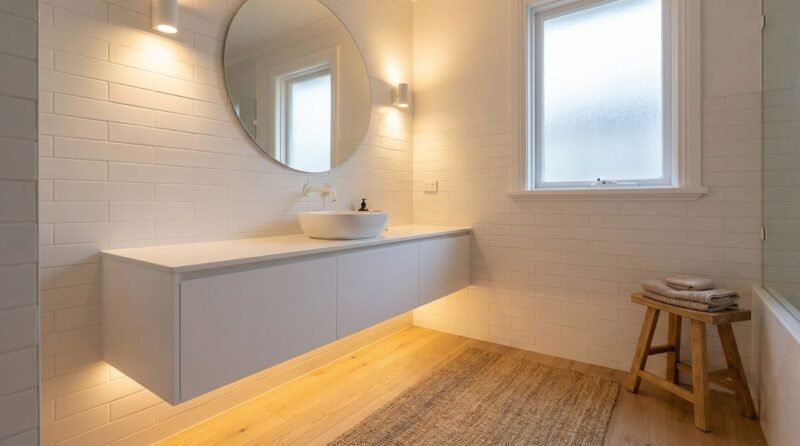
Floating vanities, characterized by their wall-mounted design that leaves the floor beneath exposed, offer a contemporary and airy aesthetic that can dramatically enhance the feel of a small bathroom. By lifting the vanity off the ground, they create an illusion of greater space, making the room appear larger and less cluttered. This design also facilitates easier cleaning of the bathroom floor, a practical advantage in high-traffic areas. While often associated with minimalist designs, floating vanities come in a variety of styles and finishes, allowing for personalization. However, their installation requires careful consideration of wall structure to ensure adequate support, and their storage capacity can sometimes be more limited compared to their floor-mounted counterparts.
Floor-Mounted Vanities: Traditional Functionality in Limited Footprints
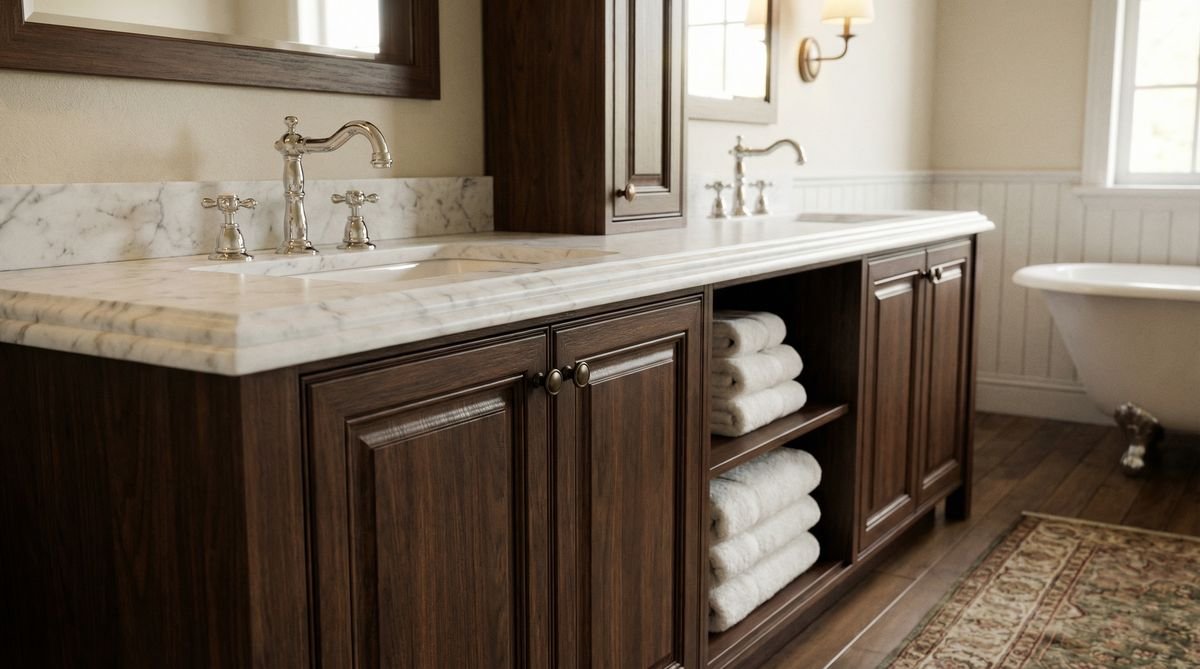
Floor-mounted vanities, also known as freestanding vanities, are traditional fixtures that rest directly on the bathroom floor. They are renowned for their robust storage capabilities, often featuring multiple drawers and cabinets that can accommodate a wide array of toiletries and bathroom essentials. This style typically offers a simpler installation process, as they do not require specialized wall reinforcement. Floor-mounted vanities are available in an extensive range of designs, from classic to modern, making them a versatile choice for various interior aesthetics. While they may occupy more visual space than floating vanities, strategic selection of size and color can mitigate this effect in smaller bathrooms. Their direct contact with the floor can, however, make floor cleaning slightly more challenging.
Key Comparison: Floating vs. Floor-Mounted for Small Bathrooms
Visual Impact and Perceived Space
Answer Capsule: Floating vanities excel in creating an illusion of spaciousness by exposing the floor beneath, making small bathrooms appear larger and more open, whereas floor-mounted vanities, despite their solid presence, can still be chosen in designs that complement and do not overwhelm compact areas.
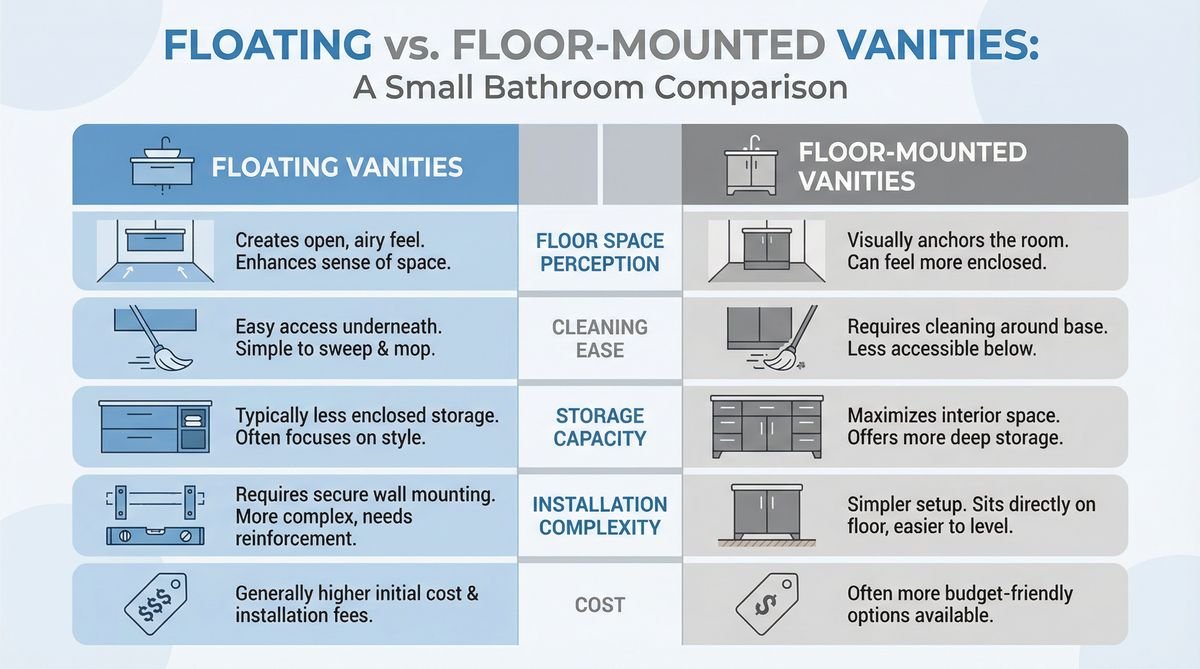
Floating vanities enhance the perception of space in small bathrooms by freeing up floor area, making the room appear larger and less confined. The open space beneath contributes to a lighter, modern aesthetic. Floor-mounted vanities occupy a defined footprint, but careful selection of streamlined designs, lighter colors, or open shelving can minimize their visual weight. The perceived space is influenced by the vanity’s design, color, and integration with the overall bathroom layout.
Storage Capacity and Organization
Answer Capsule: Floor-mounted vanities generally offer superior storage volume with more drawers and cabinets, ideal for maximizing organization in small bathrooms, while floating vanities, though often more compact, can still provide efficient storage through thoughtful internal design and integrated solutions.
Storage is critical in small bathrooms. Floor-mounted vanities typically offer greater storage capacity with deeper drawers and expansive cabinet space, ideal for towels and toiletries, helping maintain a clutter-free environment. Floating vanities, though more compact, incorporate clever storage features like hidden drawers and integrated shelving. While overall volume may be less, efficient design encourages a minimalist approach. The choice depends on storage volume needs versus a sleek aesthetic.
Installation Complexity and Cost Implications
Answer Capsule: Floor-mounted vanities typically involve simpler and less costly installation due to their self-supporting nature, whereas floating vanities require more complex wall reinforcement and professional installation, potentially increasing labor costs.
Installation complexity and cost vary. Floor-mounted vanities are simpler to install, requiring plumbing connections and securing to the wall, often resulting in lower labor costs and potential DIY installation. Floating vanities require more complex installation due to wall suspension, necessitating robust wall reinforcement and professional assistance, which can increase material and labor costs. Initial purchase prices for floating vanities can also be higher due to specialized design.
Maintenance, Cleaning, and Durability
Answer Capsule: Floating vanities simplify floor cleaning by leaving the area beneath accessible, reducing moisture exposure, while floor-mounted vanities offer robust stability but may present challenges for thorough floor maintenance around their base.
Floating vanities simplify floor cleaning by providing unobstructed access underneath, contributing to a more hygienic environment and reducing dust accumulation. Being elevated, they are less susceptible to water damage. Floor-mounted vanities, while stable, can make cleaning around their base more cumbersome due to potential dust and moisture accumulation. Both types’ durability and ease of cleaning are also influenced by their material and proper maintenance.
Making the Right Choice: A Decision Guide for Your Small Bathroom
Choosing between a floating and a floor-mounted vanity for a small bathroom involves weighing various factors against your personal preferences and practical needs. Consider the overall aesthetic you wish to achieve: a modern, airy feel often points towards a floating vanity, while a more traditional or robust look might favor a floor-mounted option. Evaluate your storage requirements; if maximizing every cubic inch is paramount, a floor-mounted vanity might be more suitable. However, if you prefer a minimalist approach and can manage with less storage, a floating vanity can be highly effective. Budget is another key determinant, as floating vanities can incur higher installation costs. Finally, think about long-term maintenance and cleaning ease. The decision ultimately hinges on finding a balance between visual appeal, functional storage, installation practicalities, and ease of upkeep that best suits your small bathroom and lifestyle.
Maximizing Space: Smart Design Tricks for Small Bathrooms
Beyond the vanity choice, several design strategies can further enhance the spaciousness and functionality of a small bathroom. Large mirrors create an illusion of depth, while light-colored tiles and paint contribute to an expansive feel. Wall-mounted toilets and corner sinks free up floor area. Vertical storage, such as tall cabinets or open shelving, provides additional storage without encroaching on the room’s footprint. Sliding or pocket doors save significant space. Thoughtful lighting illuminates the room effectively, contributing to an open and inviting atmosphere. By combining the right vanity with these smart design tricks, even the smallest bathroom can be transformed into a highly functional and aesthetically pleasing space.
Frequently Asked Questions About Bathroom Vanities
What is the average lifespan of a bathroom vanity?
Answer Capsule: The average lifespan of a bathroom vanity typically ranges from 10 to 20 years, depending on the quality of materials, construction, usage, and maintenance practices.
The longevity of a bathroom vanity is influenced by several factors, including the quality of its construction materials, the frequency of use, and how well it is maintained. Vanities made from solid wood and high-quality finishes tend to last longer than those constructed from particleboard or MDF. Proper sealing against moisture and regular cleaning can significantly extend a vanity’s life. While a well-cared-for vanity can last for decades, general estimates suggest a lifespan of 10 to 20 years. [1]
Can a floating vanity be installed on any wall?
Answer Capsule: A floating vanity cannot be installed on just any wall; it requires a wall with sufficient structural integrity, typically involving wood studs or concrete, to safely support its weight and contents.
No, a floating vanity cannot be installed on just any wall. Due to the weight of the vanity itself, plus the sink, countertop, and any items stored within, it requires substantial structural support. Installation typically involves anchoring the vanity directly into wall studs or using specialized heavy-duty anchors in concrete or masonry walls. Drywall alone is insufficient to support a floating vanity. It is crucial to assess the wall’s construction and reinforce it if necessary, often requiring professional assistance to ensure a secure and safe installation. [2]
How do I clean under a floating vanity?
Answer Capsule: Cleaning under a floating vanity is straightforward due to the exposed floor, allowing for easy sweeping, vacuuming, or mopping with standard cleaning tools.
One of the primary advantages of a floating vanity is the ease of cleaning the floor beneath it. Unlike floor-mounted units that can create dust traps, the open space allows for unobstructed access. You can easily sweep, vacuum, or mop the entire bathroom floor, ensuring a more hygienic environment. This accessibility also makes it simpler to retrieve dropped items or address spills. Regular cleaning under the vanity contributes to the overall cleanliness and aesthetic appeal of the bathroom.
Are floor-mounted vanities easier to repair?
Answer Capsule: Floor-mounted vanities can be easier to repair or replace due to their simpler installation and accessibility, often allowing for less invasive work compared to wall-mounted units.
In many cases, floor-mounted vanities can be easier to repair or replace. Their self-supporting nature means that accessing plumbing or making structural repairs often does not involve the complex wall work associated with floating vanities. If a floor-mounted vanity needs to be removed or replaced, the process is generally less disruptive to the bathroom’s structure. This can translate to lower repair costs and less time spent on the job. However, the ease of repair also depends on the specific design and construction of the vanity itself.
Do floating vanities increase home value?
Answer Capsule: Floating vanities can increase home value by offering a modern, luxurious aesthetic and enhancing the perceived spaciousness of bathrooms, appealing to contemporary buyer preferences.
Floating vanities are often seen as a desirable feature in modern homes. Their sleek design and ability to create a sense of openness can significantly enhance a bathroom’s aesthetic appeal, which in turn can positively impact home value. Buyers often appreciate contemporary design elements and the perceived luxury that floating vanities convey. While the direct impact on home value can vary based on market trends and overall home condition, a well-chosen and expertly installed floating vanity is generally considered an upgrade that can attract potential buyers and contribute to a higher appraisal. [3]
Conclusion: Tailoring Your Vanity Choice to Your Small Bathroom Needs
Ultimately, the decision between a floating vanity and a floor-mounted vanity for a small bathroom is a personal one, deeply intertwined with individual priorities for design, storage, and practicality. Floating vanities offer a modern, spacious aesthetic and ease of floor cleaning, making them an excellent choice for those prioritizing visual openness and contemporary style. Conversely, floor-mounted vanities provide robust storage and simpler installation, appealing to those who value maximum functionality and a more traditional approach. By carefully considering the nuances of each option—from visual impact and storage capacity to installation complexities and maintenance—homeowners can select a vanity that not only fits their small bathroom’s dimensions but also elevates its overall appeal and utility. The ideal vanity is one that harmonizes with your lifestyle, enhances your daily routine, and transforms your compact bathroom into a well-designed and efficient space.
References
1. How Long Do Bathroom Vanities Last? Badeloft USA.
2. Can a Floating Vanity Be Installed on Any Wall? Spry Interior.
3. Do Floating Vanities Increase Home Value? Spry Interior.