


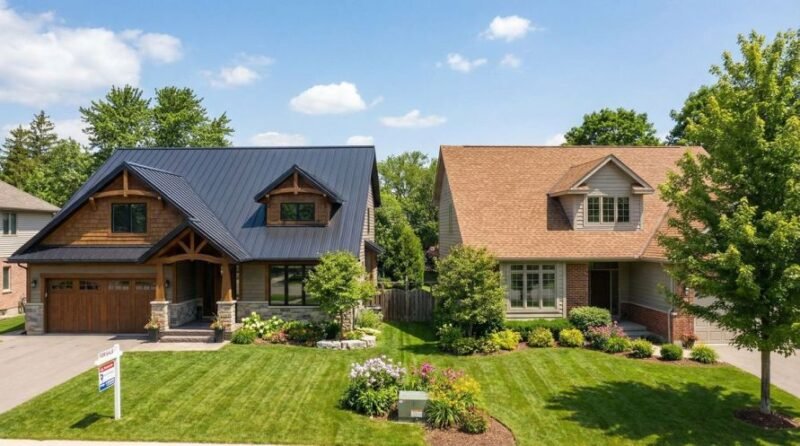
Choosing the right roofing material is a critical decision for homeowners and real estate investors alike. Metal roofing and asphalt shingles are two of the most popular options available today, each offering distinct advantages and drawbacks. This comprehensive comparison explores the pros and cons of metal roofing versus asphalt shingles, helping you make an informed choice for your property’s roof.
Overview of Metal Roofing vs Asphalt Shingles
Answer Capsule: Metal roofing and asphalt shingles differ significantly in material, longevity, cost, and aesthetics. Understanding these differences can guide homeowners toward the best roofing choice based on durability, budget, and style preferences.
Metal roofing typically consists of steel, aluminum, copper, or zinc panels and is known for its durability and longevity. Asphalt shingles are composed of a fiberglass base coated with asphalt and granules, making them a budget-friendly, widely used roofing material. Both materials have evolved considerably, with modern options offering improved performance and aesthetics.
Pros of Metal Roofing
Answer Capsule: Metal roofs offer superior durability, longevity, and energy efficiency, making them an excellent long-term investment for homeowners prioritizing strength and sustainability.
- Exceptional Durability: Metal roofing resists cracking, shrinking, and eroding. It holds up well under extreme weather conditions such as heavy rain, snow, and hail.
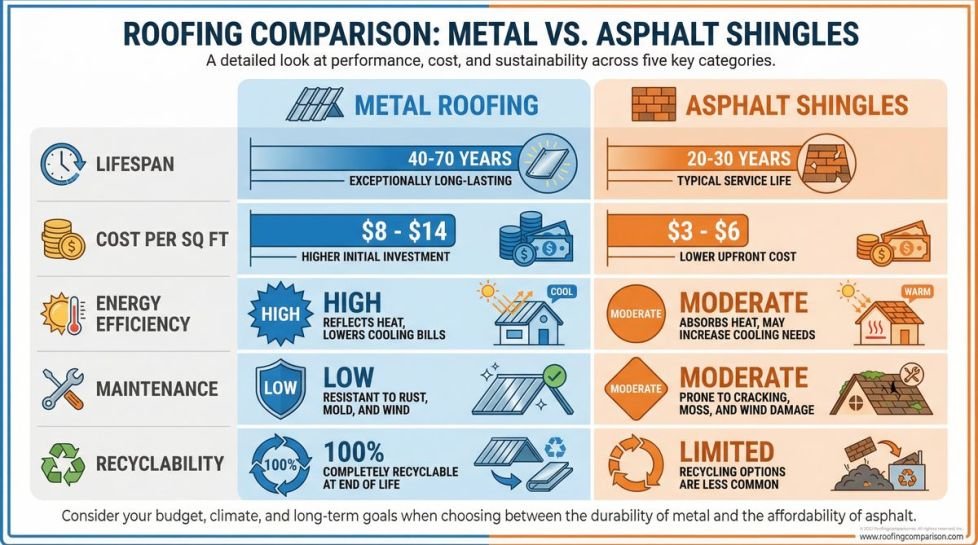
- Longevity: Metal roofs can last 40 to 70 years, far exceeding the lifespan of asphalt shingles.
- Energy Efficiency: Reflective properties of metal roofing reduce cooling costs by reflecting solar radiant heat.
- Lightweight Material: Metal is lighter than asphalt shingles, making installation easier and reducing stress on the building structure.
- Environmentally Friendly: Metal roofs are often made from recycled materials and are fully recyclable at the end of their lifespan.
- Low Maintenance: Metal roofing requires minimal maintenance and is resistant to moss, mildew, and insect infestations.
Cons of Metal Roofing
Answer Capsule: Despite their many benefits, metal roofs have higher upfront costs and may present noise concerns and installation challenges that homeowners should consider.
- Higher Initial Cost: Metal roofing materials and installation typically cost more than asphalt shingles.
- Noise Factor: Metal roofs can be noisier during rain or hailstorms unless proper insulation is installed.
- Expansion and Contraction: Metal expands and contracts with temperature changes, which can lead to fastener issues over time if not properly installed.
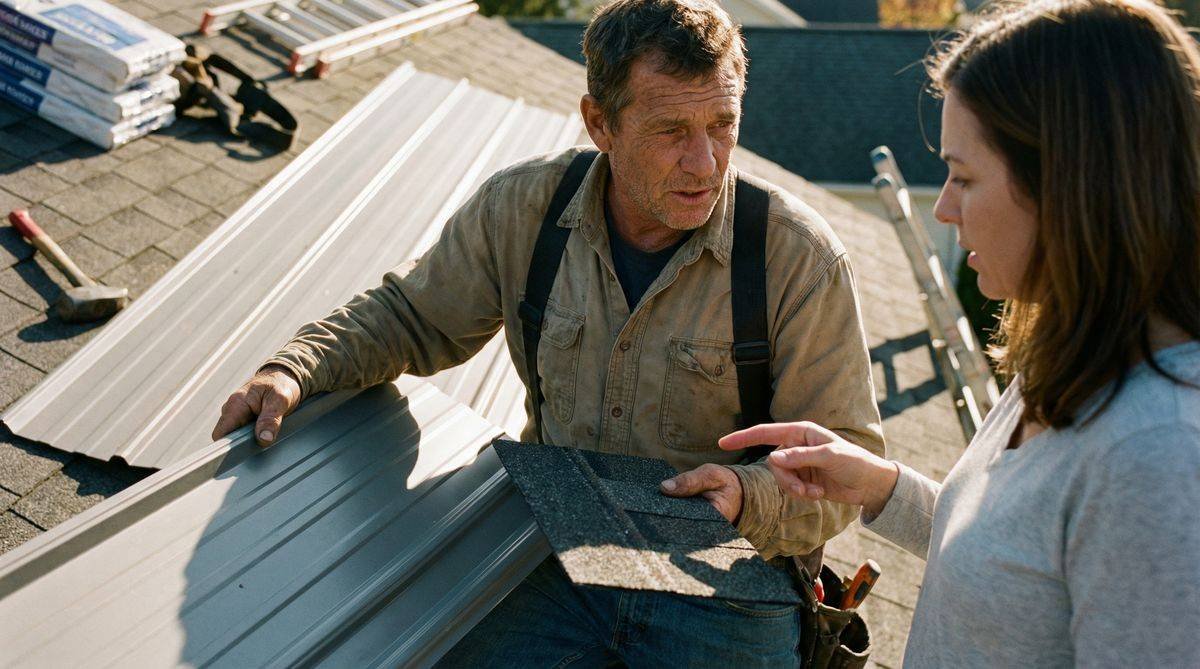
- Installation Complexity: Requires skilled contractors familiar with metal roofing systems to ensure proper installation and warranty validity.
- Limited Style Variety: Although metal roofing comes in various styles and colors, it may not match traditional aesthetics as closely as asphalt shingles.
Pros of Asphalt Shingles
Answer Capsule: Asphalt shingles remain the popular choice due to their affordability, ease of installation, and wide range of styles and colors, appealing to homeowners seeking cost-effective roofing.
- Lower Upfront Cost: Asphalt shingles are generally more affordable to purchase and install than metal roofing.
- Wide Variety of Styles and Colors: Available in numerous designs, shapes, and colors, allowing homeowners to customize the look of their roof.
- Ease of Installation: Asphalt shingles are easier and faster to install, which can reduce labor costs and time.
- Commonly Used and Trusted: Asphalt shingles have a proven track record and are widely accepted in residential real estate markets.
- Good Fire Resistance: Many asphalt shingles have a Class A fire rating, the highest available.
Cons of Asphalt Shingles
Answer Capsule: Asphalt shingles require more frequent replacement, are less durable, and can be environmentally taxing compared to metal roofing.
- Shorter Lifespan: Typically last 15 to 30 years, significantly less than metal roofs.
- Susceptible to Weather Damage: Can be damaged by high winds, hail, and temperature fluctuations.
- More Maintenance Needed: Prone to moss, algae growth, and granule loss, which requires regular upkeep.
- Environmental Impact: Asphalt shingles are petroleum-based and not easily recyclable, contributing to landfill waste.
- Heavier Weight: Asphalt shingles add more weight to the roof structure compared to metal panels.
Cost Comparison: Metal Roofing vs Asphalt Shingles
Answer Capsule: While metal roofing has higher upfront costs, it offers better long-term value due to durability. Asphalt shingles are budget-friendly initially but may incur more expenses over time due to replacement and maintenance.
| Factor | Metal Roofing | Asphalt Shingles |
|---|---|---|
| Initial Cost (per square foot) | $5 to $12 | $1 to $4 |
| Lifespan | 40-70 years | 15-30 years |
| Maintenance | Low | Moderate to High |
| Installation Time | Longer | Shorter |
| Energy Efficiency | High | Moderate |
Environmental Impact of Metal Roofing vs Asphalt Shingles
Answer Capsule: Metal roofing stands out for sustainability due to recyclability and energy efficiency, whereas asphalt shingles contribute more to landfill waste and involve petrochemical extraction.
Metal roofing is often manufactured from recycled materials and can be recycled at the end of its lifespan, reducing landfill contributions. Its reflective surface also lowers energy consumption by reducing cooling needs. In contrast, asphalt shingles are petroleum-based, non-biodegradable, and difficult to recycle, resulting in significant environmental waste. Additionally, frequent replacements increase resource consumption over time.
Aesthetic Considerations and Home Value
Answer Capsule: Both roofing materials can enhance curb appeal, but metal roofing often adds a modern, upscale look, while asphalt shingles provide traditional versatility that appeals to a broad market.
Homeowners seeking a contemporary or industrial appearance may prefer metal roofing, which offers sleek lines and a variety of finishes, including standing seam panels and metal tiles. Asphalt shingles come in numerous colors and styles, including architectural shingles that mimic more expensive materials like wood or slate, making them versatile for many architectural styles.
From a resale perspective, metal roofs can increase home value due to longevity and energy savings, but the upfront cost may deter some buyers. Asphalt shingles, being a familiar and affordable option, may appeal more to buyers looking for traditional aesthetics and lower initial investment.
Frequently Asked Questions
Which roofing material is more durable, metal or asphalt shingles?
Metal roofing is more durable, often lasting 40 to 70 years, while asphalt shingles usually last 15 to 30 years under typical conditions.
Do metal roofs get noisy during rain or hail?
Metal roofs can be noisier than asphalt shingles during rain or hail, but proper insulation and underlayment can significantly reduce noise.
Which roofing option is more energy-efficient?
Metal roofing is more energy-efficient due to its reflective properties, which help to reduce cooling costs, especially in warmer climates.
How do the costs compare over time between metal and asphalt shingles?
Metal roofs have higher initial costs but lower maintenance and longer lifespan, offering better long-term value. Asphalt shingles are less expensive upfront but may require replacement and more maintenance, increasing costs over time.
Can metal roofs be installed over existing asphalt shingles?
Yes, metal roofs can often be installed over existing asphalt shingles, which can save on removal costs and reduce landfill waste, but it depends on local building codes and roof condition.
Do metal roofs affect homeowners insurance rates?
Some insurance companies offer discounts for metal roofs due to their durability and resistance to fire and wind damage, potentially lowering insurance premiums.
Climate Considerations for Roofing Material Selection
Climate is one of the most important factors when choosing between metal roofing and asphalt shingles. Each material performs differently depending on temperature extremes, precipitation levels, and local weather events such as hurricanes, wildfires, or heavy snowfall.
In regions with hot summers and high solar exposure, metal roofing’s reflective properties provide a meaningful advantage. The material can reduce attic temperatures by up to 25 degrees Fahrenheit compared to dark asphalt shingles, directly lowering air conditioning loads. Cool-roof metal systems with specialized coatings amplify this effect further.
For cold climates with heavy snowfall, metal roofing’s smooth surface allows snow to slide off more readily, reducing the risk of ice dams and structural overload. Asphalt shingles, with their textured surface, tend to hold snow longer, which can create ice dam conditions at the eaves when interior heat escapes through the roof deck.
In coastal environments, aluminum or zinc metal roofing outperforms steel due to superior corrosion resistance in salt air. Standard steel panels require high-quality coatings and regular inspection in coastal zones. Asphalt shingles in coastal areas are susceptible to wind uplift and may require enhanced fastening systems to meet local building codes.
Installation Requirements and Contractor Selection
The quality of installation is as important as the material itself. Both metal roofing and asphalt shingles require skilled contractors, but the consequences of poor installation are more severe and costly with metal roofing systems.
Asphalt shingle installation is a well-standardized process taught to virtually every roofing apprentice. The wide availability of experienced contractors creates healthy price competition and makes it easier to find qualified professionals in most markets. Most manufacturers require installation according to specific guidelines to maintain warranty coverage, but the process itself is relatively forgiving.
Metal roofing installation demands greater precision. Standing seam systems in particular require specialized tools and training to ensure proper panel alignment, seam locking, and thermal expansion accommodation. Improper installation can lead to leaks, fastener failures, and voided warranties. Homeowners should verify that contractors hold manufacturer certifications and carry adequate insurance before proceeding with a metal roofing project.
When obtaining quotes, homeowners should request itemized breakdowns that separate material costs from labor, and should ask specifically about the installer’s experience with the chosen metal roofing system. A lower bid from an inexperienced contractor can result in far greater costs down the road.
Conclusion
Both metal roofing and asphalt shingles have unique strengths and weaknesses that make them suitable for different homeowner needs and budgets. Metal roofing excels in durability, longevity, and environmental benefits but comes with higher upfront costs and installation requirements. Asphalt shingles offer affordability, ease of installation, and aesthetic flexibility but may require more frequent replacement and maintenance.
Ultimately, the choice depends on priorities such as budget, desired lifespan, energy efficiency, and style preferences. Consulting with a qualified roofing professional can provide personalized recommendations based on the specific conditions and goals of the property.
References
- National Roofing Contractors Association – Metal Roofs
- “Metal Roofing vs Asphalt Shingles,” HomeAdvisor
- “Pros and Cons of Metal Roofing,” This Old House
- “Asphalt Shingles: Pros and Cons,” RoofingCalc